
Chairil Anwar Wrote Like a Shout
Twenty six years, roughly seventy poems, and a national language permanently rewired. Indonesian modernism arrived in a single voice and was gone before it could repeat itself.
Jakarta, 1943. The city is called Batavia by some and Jakarta by others, which tells you everything about the year. The Dutch have gone, the Japanese have arrived, and independence is a rumour that people are careful about repeating aloud. In a rented room a thin young man from Medan, chronically ill, chronically broke, endlessly reading, writes a poem in the first person that begins by refusing to be consoled. He is twenty one. The poem is called Aku, which simply means I, and Indonesian poetry does not recover from it.
To understand the size of the break you have to know what came before. The dominant literary generation, gathered around the journal Pujangga Baru, wrote a Malay that was ornate, mannered and deeply respectable. It carried the older verse forms, the pantun and the syair, and it had absorbed a considerable amount of Dutch romanticism along the way. The result was frequently beautiful and almost always decorous. Poetry was something you performed toward the reader, in a voice slightly grander than your own.
Chairil wrote as if he had never agreed to any of that. The lines are short. The syntax is bare. The verbs carry the weight and the ornament is simply absent. Most importantly the pronoun is aku, the blunt informal I, rather than the softer saya. In Indonesian that choice is not a stylistic preference, it is a posture. And in Aku he uses it to declare himself a wild beast driven out from the herd: aku ini binatang jalang. Nobody in that literature had spoken in that register before, about themselves, in print.
The political timing matters more than the literary timing. Indonesian as a national language was still young and still, in a sense, unproven. The Youth Pledge of 1928 had declared it the language of a nation that did not yet legally exist, which was an act of enormous nerve. But a language can be declared official and still be doubted. Administration and journalism prove that a language can carry business. They do not prove it can carry an interior life. That is a separate and much harder demonstration, and until somebody makes it, an official language remains a bureaucratic instrument rather than a home.
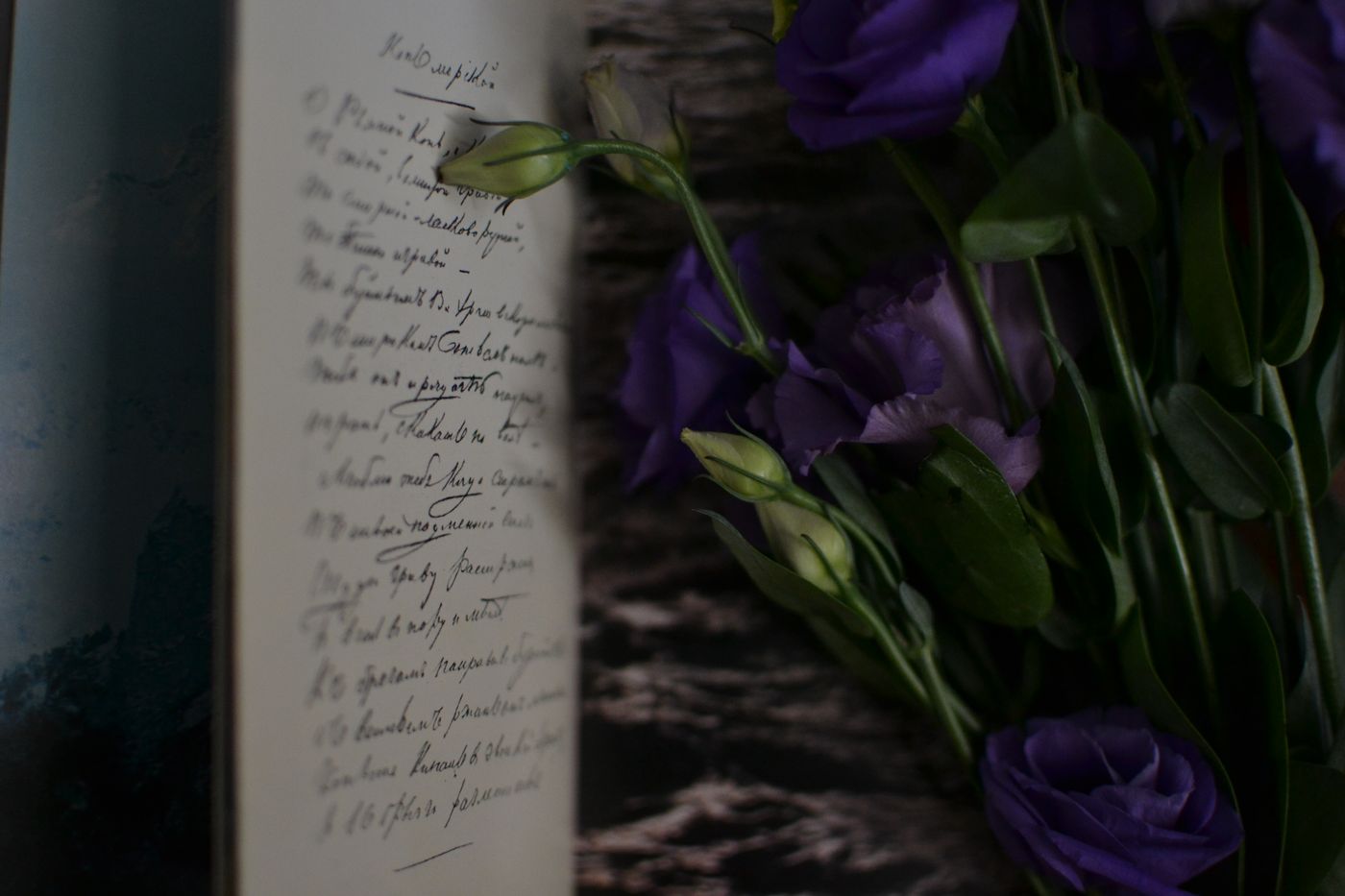
Chairil made that demonstration almost single handedly. He showed that Bahasa Indonesia could hold rage, appetite, self-disgust, mortality and desire without borrowing a European posture to do it. That is nation building conducted through pronouns and line breaks, and it is why he is taught to schoolchildren who have no particular interest in poetry. The generation he belongs to is called Angkatan 45, the Generation of 45, named for the year independence was proclaimed. Their work became the internal soundtrack of a revolution that then had to be fought for four more years against a Dutch state unwilling to accept the announcement.
The life itself was short and disorderly. Born in Medan in 1922, he moved to Batavia as a teenager, never finished a formal education, and read with the particular hunger of someone who has decided that libraries are the only institution he needs. He read in Dutch and English: Rilke, Slauerhoff, Archibald MacLeish, Nietzsche somewhere in the background. He worked irregularly, borrowed constantly, and by most accounts was difficult company and entirely aware of it.
He was also, and this should be said rather than tidied away, an unreliable borrower in his art as well as his life. Several of his poems are close adaptations of foreign originals, and the resemblance between his Krawang Bekasi and MacLeish's The Young Dead Soldiers has been debated in Indonesian criticism for decades. Some of this is ordinary translation practice for the period, when adaptation was a normal mode and attribution conventions were loose. Some of it is not, and the accusations of plagiarism are not baseless.
The honest way to hold both facts at once is to notice what he was doing structurally. A young poet in a colonised country encounters a canon he was never invited into and has no standing within. Metabolising it aggressively, sometimes without credit, is not admirable, but it is legible. And what came out the other side was not imitation. Whatever he took, the thing he produced sounded like nobody in Europe, because the language it landed in had its own gravity and its own history and would not behave like Dutch.

He died on 28 April 1949 in Jakarta, aged twenty six, poor and ill, in a hospital, of a combination of ailments that his biographers still argue over. Independence was recognised at the end of that same year. He missed it by months, which is the kind of detail a novelist would be told to cut for being too neat. He is buried at Karet, and Indonesia now marks 28 April as its national literature day, a country having decided that the appropriate birthday for its literature is the day one poet stopped writing.
The complete surviving output is around seventy poems. That is the entire body of work. It would be a thin year for a productive writer and it is instead an entire canon, taught, memorised, argued over, quoted by politicians and printed on walls. Read now, at a distance from the revolution that produced it, what survives is not the biography and not the scandal. It is the compression. He wrote lines that stop several beats before comfort arrives, and that refusal is what keeps them alive on the page eighty years later.
There is a lesson in that for anyone making things in small quantities, and it has nothing to do with dying young. Chairil is the strongest available evidence that a small body of uncompromised work outlives a large body of careful work. Seventy poems, no padding, nothing included to please. If you make one thing a year and it is true, the arithmetic is on your side.
Find Aku and read it aloud, in Indonesian, even if you do not speak a word of the language. The consonants do the work. You will hear the shout without needing the translation, which is exactly what he was trying to prove.