
The Business Lunch, Rehabilitated
It was killed for good reasons and buried with the wrong ones. Commerce conducted slowly, at a table, in front of food, remains the most efficient instrument we have ever built for deciding whether to trust someone.
The business lunch died of its own excess, and the autopsy is public record. In America it acquired a nickname, the three martini lunch, and became a political target precisely because it was indefensible in the form it had taken: long, heavily alcoholic, expensive, and subsidised by a tax deduction that meant the public was partly paying for it. Kennedy went after it in the early sixties. Carter campaigned against it in 1976. The deduction was progressively cut through the eighties and nineties until only half the cost could be claimed, and the ritual never fully recovered.
Everything that killed it deserved to kill it. The drinking was genuinely a problem. The expense abuse was real. And the older form was quietly exclusionary in ways rarely stated at the time: a three hour lunch is available to people with no school run, no caring responsibilities and no second job, which in practice meant a narrow demographic making decisions among themselves while everyone else ate at their desk. Nobody should want that back.
But something functional went into the ground alongside the excess, and the replacement has been poor. What replaced the business lunch was not a better meeting. It was the sandwich at the keyboard, the thirty minute video call with a hard stop, and the quiet assumption that eating is a biological interruption to be minimised rather than an occasion with a purpose. The efficiency is real and the loss is real, and only one of them appears in any measurement.
What was lost is best described by what shared eating actually does, which has been studied more seriously than the topic suggests. Research from Robin Dunbar's group at Oxford on social eating found that people who eat more often with others report greater wellbeing, wider support networks and stronger community engagement. The mechanism they propose is not mysterious: eating together is one of a small set of behaviours that reliably builds social bonds, which is why nearly every culture on earth has independently made a ceremony of it.
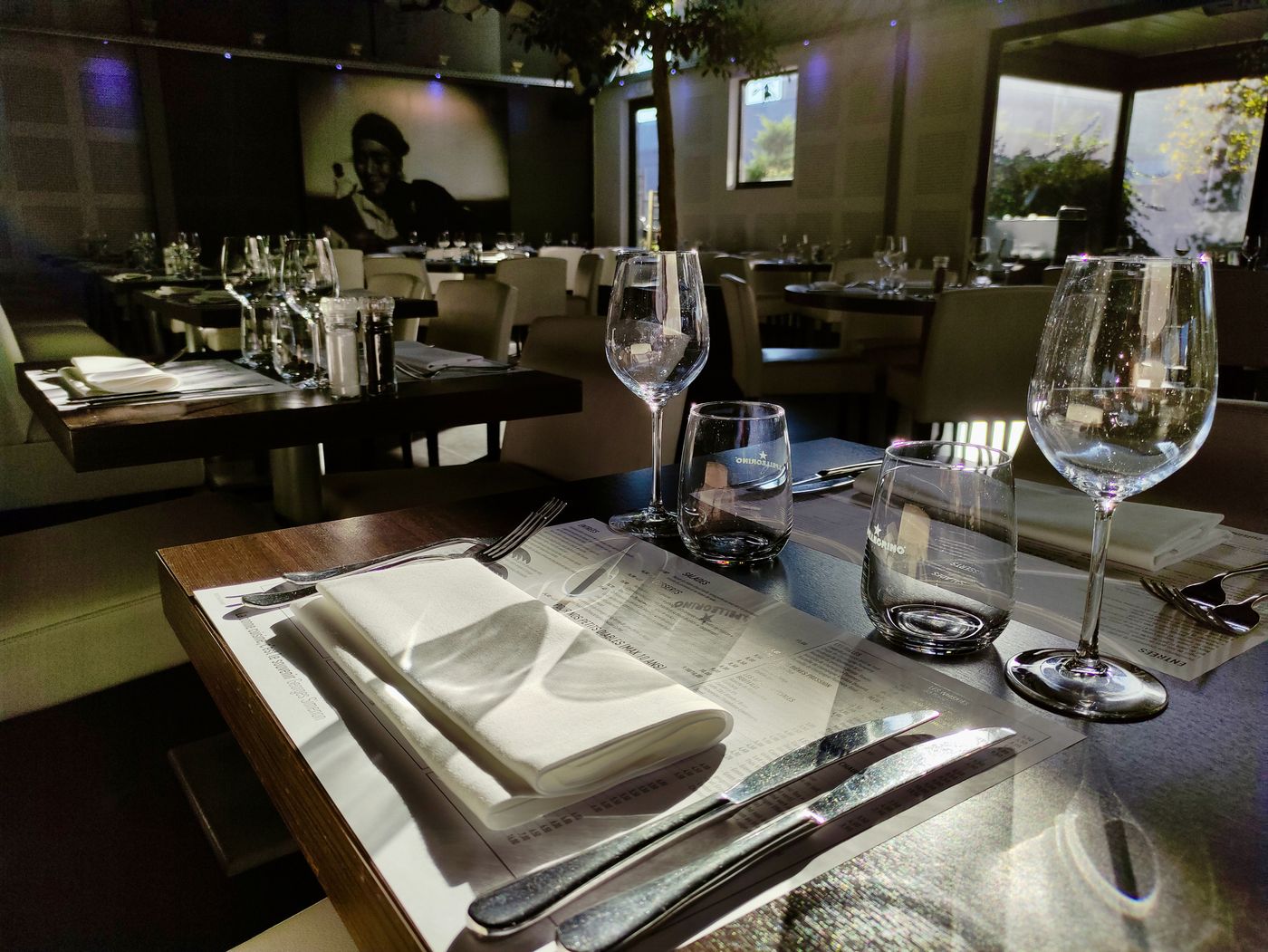
The negotiation literature points the same way. Studies by Lakshmi Balachandra found that negotiators who dealt over a meal reached better joint outcomes than those who negotiated in a plain meeting room. Sharing food appears to shift people from positional bargaining toward problem solving. This is not a soft finding about atmosphere. It is a measurable difference in the quality of deals, produced by the presence of a table and something on it.
Other business cultures never accepted the funeral. Japan maintains settai, formal entertaining of clients, and nomikai, the drinking gathering, both understood as places where things get said that cannot be said in the meeting. France protected the long lunch with a seriousness that outsiders find comic until they notice how much gets decided there. Spain has sobremesa, the hours at the table after the plates are cleared, which is the same institution stripped of any pretence that it is about the food. All of these are widely mocked as inefficiency by people who have never had to work out, quickly, whether a stranger can be trusted with something important.
Indonesia has the most instructive version of all, and it is architectural rather than temporal. At a Padang table the food arrives as a spread of small dishes placed between everyone, and you take from the shared middle. Nobody has their own plate of the important things. The arrangement enforces reciprocity: you must pass, offer, notice what the other person has not reached, and moderate your own taking against a common pool. Anyone who has eaten this way with a potential partner has already learned something about them that no meeting reveals. Generosity and greed are both extremely visible over a shared bowl.
That is the underlying case. A meal is a long, low pressure, semi structured encounter in which a great deal of character becomes legible. How someone treats the person serving them. Whether they order first or last. Whether they can tolerate a silence. Whether they insist on splitting exactly or wave it away. Whether they are still listening at minute fifty. None of this appears on a video call, where everyone is a head in a rectangle for twenty five minutes and the meeting ends the moment the agenda does.
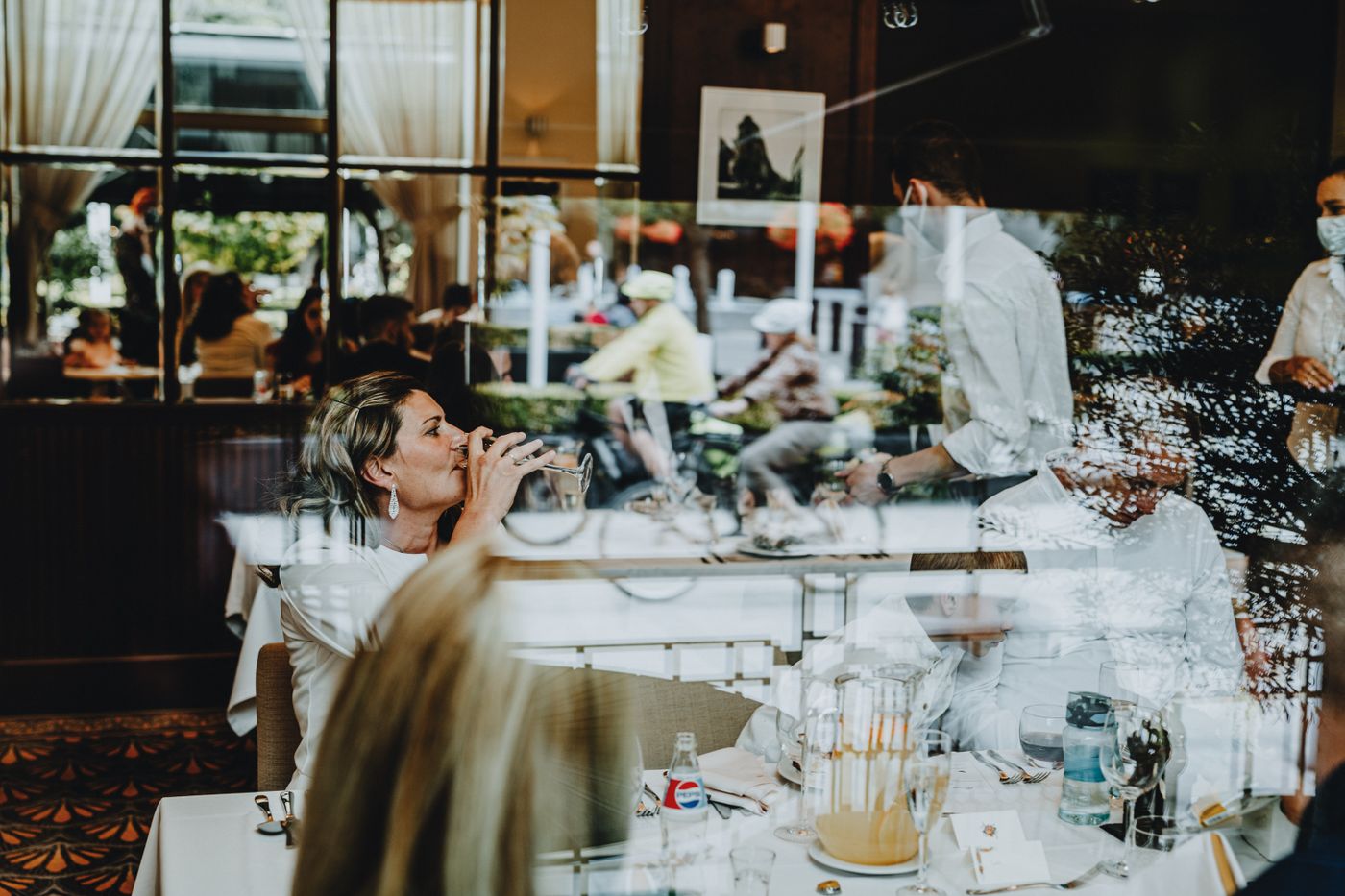
Rehabilitation therefore means keeping the function and discarding the pathology, and the rules are not complicated. Alcohol is optional and increasingly beside the point; the ritual never depended on it and is frequently better without. Seventy five minutes, not three hours, which puts it within reach of people with lives. Phones face down and off the table, since the entire value is undivided attention and a screen destroys it faster than a bad meal. Order dishes for the middle wherever the cuisine allows, because sharing is doing the work. The host orders first, decisively, which removes the anxious negotiation about price signalling. And nobody opens a laptop, ever.
The other rule is about who is invited. If the lunch reproduces the old exclusion it has failed regardless of how good the food is. A midday meal, kept within a normal working window, in a place with a range of prices, is available to almost anyone. The three hour version was never really about the meal. It was about demonstrating who had the freedom to disappear for an afternoon.
For a house of one there is a specific argument here. Almost every consequential relationship this house has, with a supplier, a collaborator, a writer, a customer who became a friend, was settled over a table rather than in correspondence. Email is excellent at transmitting decisions and hopeless at producing them. A meal is where the decision forms, usually somewhere after the plates are cleared and before anyone remembers to ask for the bill.
Book the table. Keep it to an hour and a quarter. Put the phone away and order for the middle. It will look like an indulgence on the calendar and it is, in fact, the most efficient meeting you will hold all month.