
The Designer Who Never Showed His Face
Martin Margiela gave no interviews, took no bows, and changed everything. Anonymity as the last flex.
For twenty years, the most influential designer in fashion answered questions only by fax, collectively signed as Maison Martin Margiela. He never took a bow at his own shows. He was photographed so rarely that colleagues joked he might be several people. The label inside the clothes was four white stitches holding a blank piece of cloth, visible from the outside only as four tiny points on the back of a jacket, which promptly became the most recognizable logo of its era. The refusal became the signature. He would have hated how well it worked.
The clothes carried the same logic. Margiela deconstructed garments to their seams and lining and showed the anatomy as the design: jackets worn inside out, a vest made of broken plates, sneakers modeled on Soviet army trainers that now outsell most of the sneakers on this journal's radar. The work asked one question over and over: what is left of fashion if you remove the designer, the logo and the spectacle? The answer, it turned out, was the clothing.
Hold that against the present tense. The founder is now the content. The designer walks the runway, posts the studio, narrates the process, apologizes on camera when required. Personal brand is taught as a survival skill, and the face is the collateral. In that economy, Margiela's silence reads less like eccentricity and more like the most expensive position available: he bet that the work could carry all of the meaning, and the bet paid so completely that he could retire in 2009, unphotographed, and let the house continue without him as if he had been a method rather than a man.
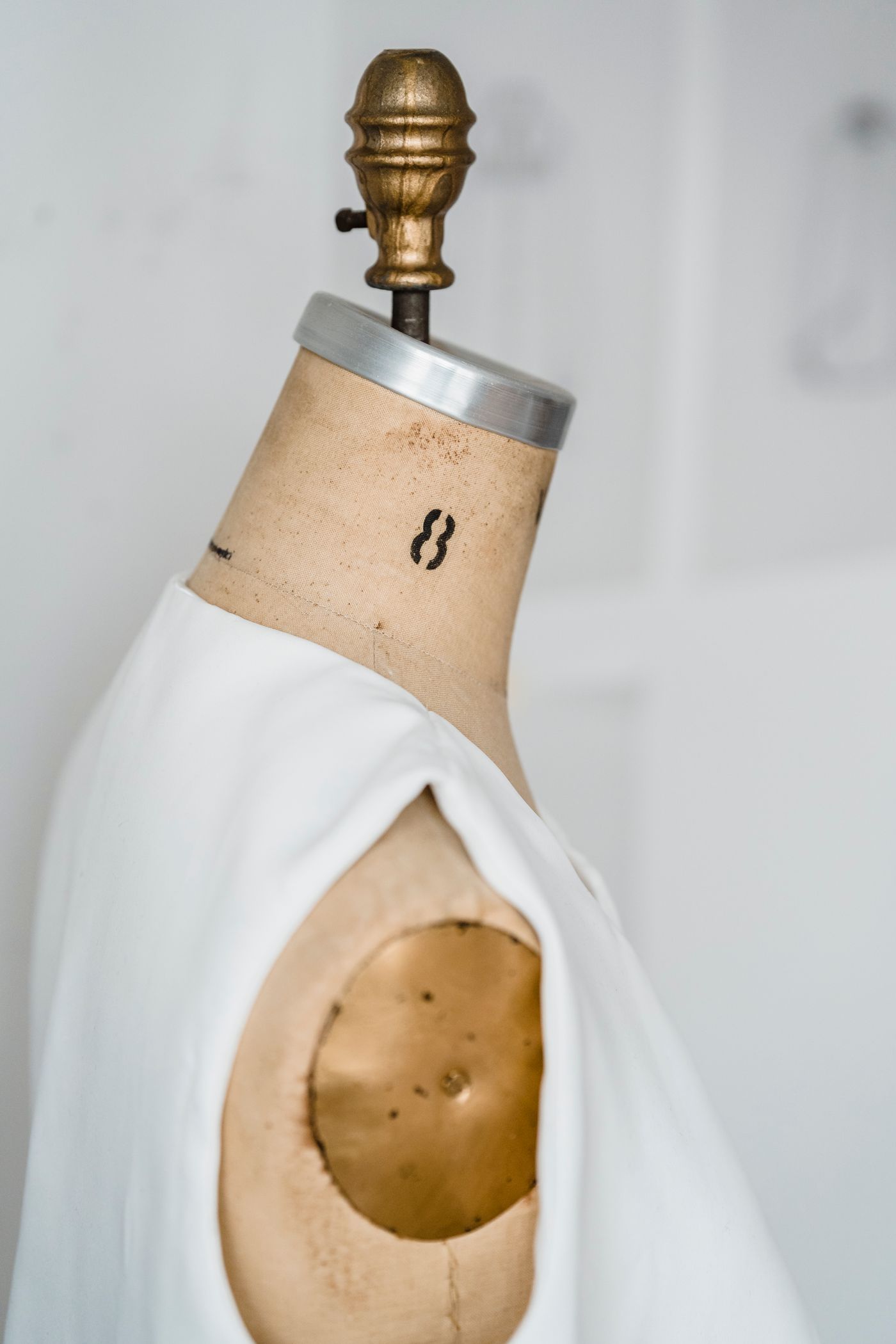
There is a lesson here that is bigger than fashion, and this house takes it personally. We sign our bottles with a house name, not a founder's portrait, for the same reason: the perfume has to do the talking, because anything the face says on its behalf is borrowed credibility. Anonymity is not modesty. It is a quality-control mechanism, the decision to be judged only by what the hands actually made.
The four white stitches are still out there, on the shoulders of people who will happily explain them to you, which is the joke Margiela saw coming: even anti-branding becomes a brand once it works. The difference worth keeping is where the meaning sits. On a face, meaning dies with attention. In a seam, it lasts as long as the garment. Build in seams.