
The Dye Farmers
The most modern designers in Indonesia went backward: to the village, the indigo vat, and the canting pen.
Fashion likes to describe its future in terms of technology: seamless knits, recycled polymers, garments designed by algorithm. Meanwhile the most genuinely forward-looking labels in this country are run by people who spend their time in villages, asking grandmothers how the dye used to be made. It turns out the future of Indonesian fashion smells like indigo leaves fermenting in a clay vat.
Consider SukkhaCitta, Denica Flesch’s farm-to-closet house, where every fabric is built entirely from plants: fibers grown regeneratively, colors cultivated by farming cooperatives or reclaimed from food waste, all of it traceable back to the plot of land it started on. The work spans hundreds of artisans and farmers across villages in Java, Kalimantan, Bali and Flores, and the incomes in those villages have risen by nearly half since the work began. Or Sejauh Mata Memandang, Chitra Subyakto’s Jakarta label, which puts natural-dye batik and heritage textiles on runways and keeps its packaging compostable, treating slowness as a design specification rather than a marketing word.
What makes these designers matter for this section is not the sustainability language, which every brand now rents by the paragraph. It is where they put the authorship. In both houses, the women at the vat and the canting are named as makers, not sourced as labor. The dye recipe belongs to the village that kept it. The design happens in conversation with the people whose hands will execute it, which is roughly the opposite of how the industry has worked for a century.
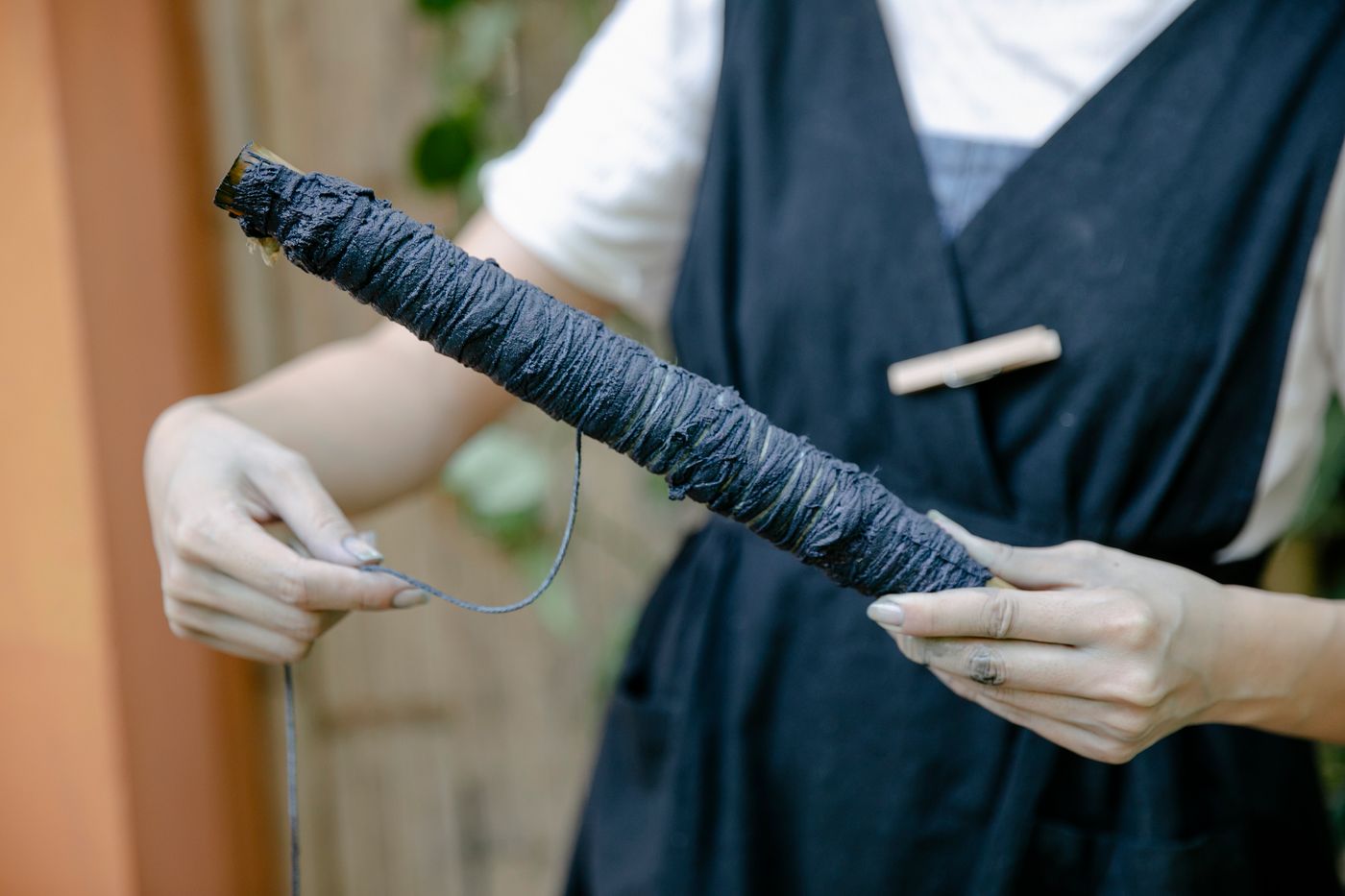
The craft itself rewards the attention. Natural indigo is not a pigment but a process: leaves fermented, the vat kept alive like a sourdough, the cloth dipped and oxidised from green to blue in the open air, a small chemistry lesson performed daily by memory. Batik tulis is slower still, wax drawn line by line with the canting, dyed, boiled, drawn again. Both sit in the house’s Index for a reason. They are perfumery’s cousins: time, plants and patience, persuaded into beauty.
This house recognises the model because it lives a small version of it. Our Correspondence page describes materials distilled by local partner stills whose names stay protected, bought in small honest quantities. Different craft, same conviction: that the archipelago’s hands are world class, and that the correct response is to pay them properly and put their work forward, not to sand their fingerprints off the product.
The takeaway for a wardrobe is simple. One naturally dyed garment, bought once, ages the way the house’s materials do: it develops instead of degrading. The indigo softens toward the exact blue of a work shirt twenty years loved. The batik keeps the tremor of the hand that drew it. Fast fashion sells you a photograph of a garment. The dye farmers sell you a garment that becomes a photograph slowly, on your body, over years.