
Toraja, the Other Highlands
Aceh has Gayo. Sulawesi has Toraja, where the coffee grows between funerals, and both facts matter to the cup.
When this journal wrote about Gayo, the highlands of Aceh, we called Indonesian coffee the most distinctive on earth and promised the other mountain would get its turn. This is the turn. Toraja, in the highlands of South Sulawesi, grows the country's other legendary cup, and it grows it inside one of the most extraordinary living cultures in Asia, which is not a coincidence the house is prepared to ignore.
The place first. Tana Toraja sits at altitude in a landscape of rice terraces and grey karst, and its villages are built around tongkonan, ancestral houses with roofs that sweep up at both ends like the hulls of ships, always facing north, walls carved and painted with buffalo motifs. The Torajans' fame, the thing the anthropologists and the house's own Index came for, is their relationship with death: funerals are the society's central ceremony, saved for and staged over days, with buffalo sacrificed by rank, and the dead often kept in the family home, dressed and spoken to, for months or years until the family is ready. Grief, in Toraja, is not an event. It is a season, given the respect of duration.
Now the cup, because the terroir and the culture share a tempo. Toraja arabica grows between roughly 1,400 and 1,900 meters on volcanic soil, mostly on smallholdings measured in fractions of a hectare, and it is processed the Indonesian way: giling basah, wet hulling, the parchment stripped while the bean is still moist. This is the step outsiders spent decades calling a defect until the world's palate caught up. Wet hulling trades bright acidity for weight, and Toraja's version of the trade is the deepest in the archipelago: a heavy, syrupy cup, low acid, dark chocolate underneath, and on top the notes the trade politely calls earthy and forest floor, damp cedar, sweet tobacco, something close to the smell of rain arriving. Japanese buyers understood first, Toraja has been a treasured origin in Japan since the seventies, and paid it grand cru prices while the West was still chasing brightness.
The house would like to make the perfumer's observation here, because nobody else will: forest floor, damp earth, cedar and tobacco is not a flavor list, it is an oakmoss accord. Toraja coffee sits on the palate almost exactly where a classic chypre sits on the skin, dark, dry, rooted, and long. Of the senses' many cross-references in this journal, this is among the most literal. If you want to know what the base of a chypre feels like without buying a bottle, order the Toraja, black, and wait for the finish.
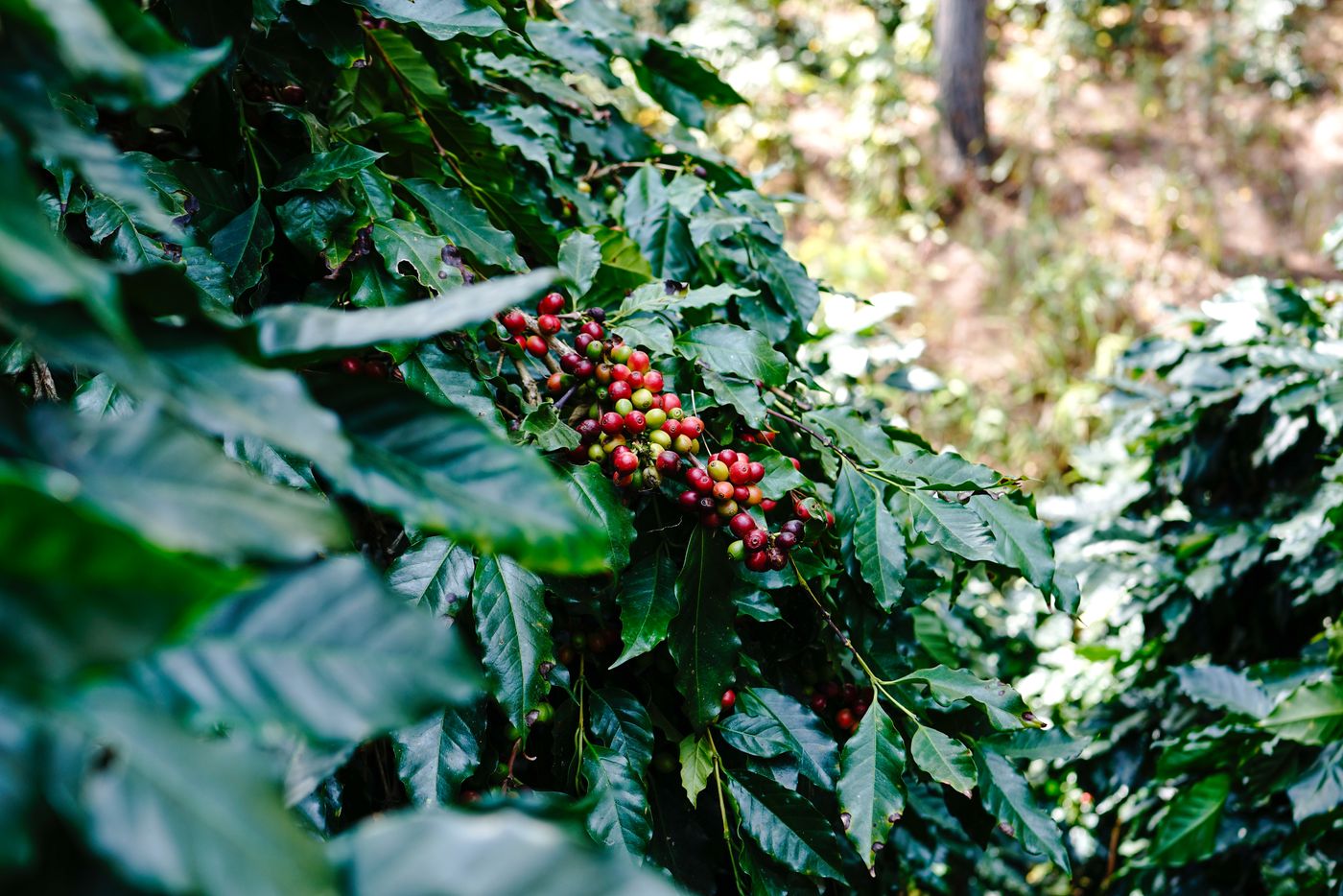
The economics run through the funerals, and this is the part visitors rarely learn. A proper Torajan funeral can cost more than a house, buffalo alone can run to the price of cars, and coffee is one of the crops that finances the obligation. Families hold harvests for ceremony years; a good price in a funeral season matters differently than it does elsewhere. Which means the cup you drink participated, somewhere upstream, in the financing of memory itself, a sentence this house did not expect to write about a beverage and refuses to delete.
Drinking notes, for the practical reader. Toraja wants darker roasts than the bright origins; its virtues are in the body, not the top. It survives milk better than almost any coffee alive but is best black and slightly cooled, when the forest floor opens. Kalosi is the classic trade name to look for, from the town the beans historically shipped through. And it makes the definitive kopi tubruk, unfiltered, grounds in the glass, a preparation this journal defends at full length one piece from now.
Go if you can; the house rates it beside Yogyakarta among the essential Indonesian journeys. Come for the tongkonan and the ceremonies, which will rearrange your assumptions about grief. Stay for the morning cup at altitude, drunk facing roofs shaped like ships, and understand that the two experiences are one system: a people who decided that nothing important, not the dead, not the harvest, not the morning, should ever be rushed.