
Cloth Worth a Life Savings
In Sumba the grandmothers still dye with roots while the collectors circle.
On a dry island east of Bali, a piece of cloth can take four years. The pattern is tied into the threads before any weaving begins, bundle by bundle, then dipped in indigo grown behind the house and a red pounded from the roots of the mengkudu tree. Dyeing waits for the right season. The weaving waits for the dyeing. A major hinggi, the large men's cloth of Sumba, is the compressed labor of a household across the length of a presidential term, and everyone involved can read it: the clan, the ancestors, the horses, the skull tree, the marriage it was made to seal.
Now read the same object through the other lens, the one this journal uses for sneakers. Extremely limited supply, since the master dyers are old and the young have phones and options. Unfakeable provenance, since machine ikat gives itself away in a second to anyone who has held the real thing. Cultural weight no marketing budget could buy. Collectors in Jakarta, Tokyo and Los Angeles bidding quietly through dealers. A hinggi that would have been bartered for livestock two generations ago now moves for the price of a motorbike, sometimes a car. The hype economy discovered Sumba without ever calling it a drop.
The money is not the villain in this story, and it would be a colonial reflex to wish the weavers poor and picturesque. The market has kept looms warping that would otherwise have stopped, put daughters through school, and made a handful of grandmothers minor celebrities at textile fairs. The tension is subtler. A cloth woven for a funeral has a job. A cloth woven for a collector has a price. The techniques survive either way; the question is whether the meaning rides along, or whether Sumba ends up exporting empty masterpieces, perfect ikat with nobody inside.
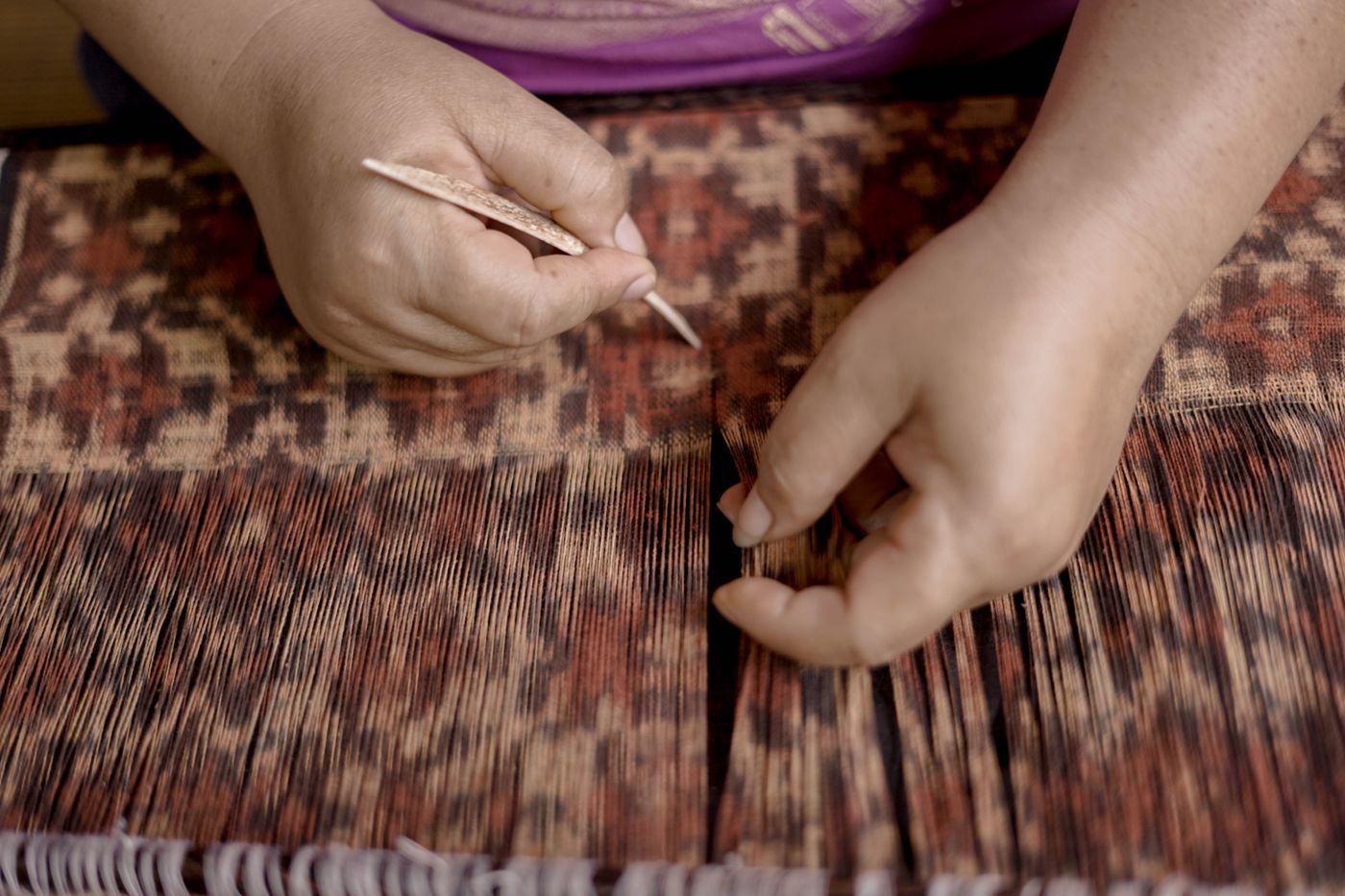
The villages have their own answer, and it is older than the market: some cloths are simply not for sale. Every serious weaving family keeps pieces that no dealer will ever see, the ones that attend the funerals and the marriages, and sells the rest with a clear conscience. That line, drawn at the household level, is the whole game. It is the same line the dye farmers hold over their indigo vats, and the same one this house holds over certain materials and certain stories: the market may have almost everything. Almost.
If you ever buy one, buy it the way the island makes it. Slowly, in person if you can, from as close to the loom as the chain allows, and expect to pay what four years of a family's evenings are worth. Then use it. Hang it where the light moves. A cloth like that was never meant to live in acid-free tissue. It was meant to attend things.