
The Third Wearing
Familiarity alone produces liking, with no new information involved. It is the most underrated force in taste, and the reason you should never judge a bottle on the first day.
In 1968 Robert Zajonc published a paper with a deceptively plain title, on the attitudinal effects of mere exposure, and demonstrated something that ought to be more disturbing than it is. Show a person a meaningless shape, an unfamiliar Chinese character, a nonsense word or a stranger's face several times, and they will report liking it more than an equivalent item they have seen once. No reward is attached. No information is provided. Nothing about the object changes. Repetition alone moves preference.
The effect held across an unusual range of materials and has been replicated for decades. More unsettling still, later work by Kunst-Wilson and Zajonc showed it operating below the threshold of recognition: stimuli flashed too briefly to be consciously identified still produced a measurable preference afterwards. People could not say which shapes they had seen, and still liked those ones more.
The accepted explanation is perceptual fluency. A stimulus encountered before is processed more efficiently the next time, and that processing ease registers as a faint positive feeling. The mind then does what minds do with unexplained feelings: it attributes the pleasantness to the object rather than to the ease of perceiving it. Liking, in this account, is partly a misreading of familiarity as quality.
There is a well known demonstration of this that requires no laboratory. People generally prefer the mirror image of their own face, while their friends prefer the photograph. Each party favours the version they have seen more often. The same face, two audiences, two opposite verdicts, produced entirely by exposure history.
The effect is not unlimited, which matters. The relationship between exposure and liking is an inverted U. Preference climbs with repetition, plateaus, and then declines into satiation and irritation, which anyone who has heard a song played to death on the radio has experienced from both ends. Complexity moves the peak: simple stimuli wear out quickly, complex ones tolerate far more exposure before the decline begins. A three note jingle exhausts itself in a week. A piece of music with real structure can be listened to for thirty years.
That last point is the one worth carrying into any judgement about taste. When something is immediately delightful and then becomes unbearable, it was probably simple. When something is unremarkable at first and improves for years, it was probably complex, and you met it before you had the resolution to perceive it. The initial reaction contains almost no information about which case you are in.
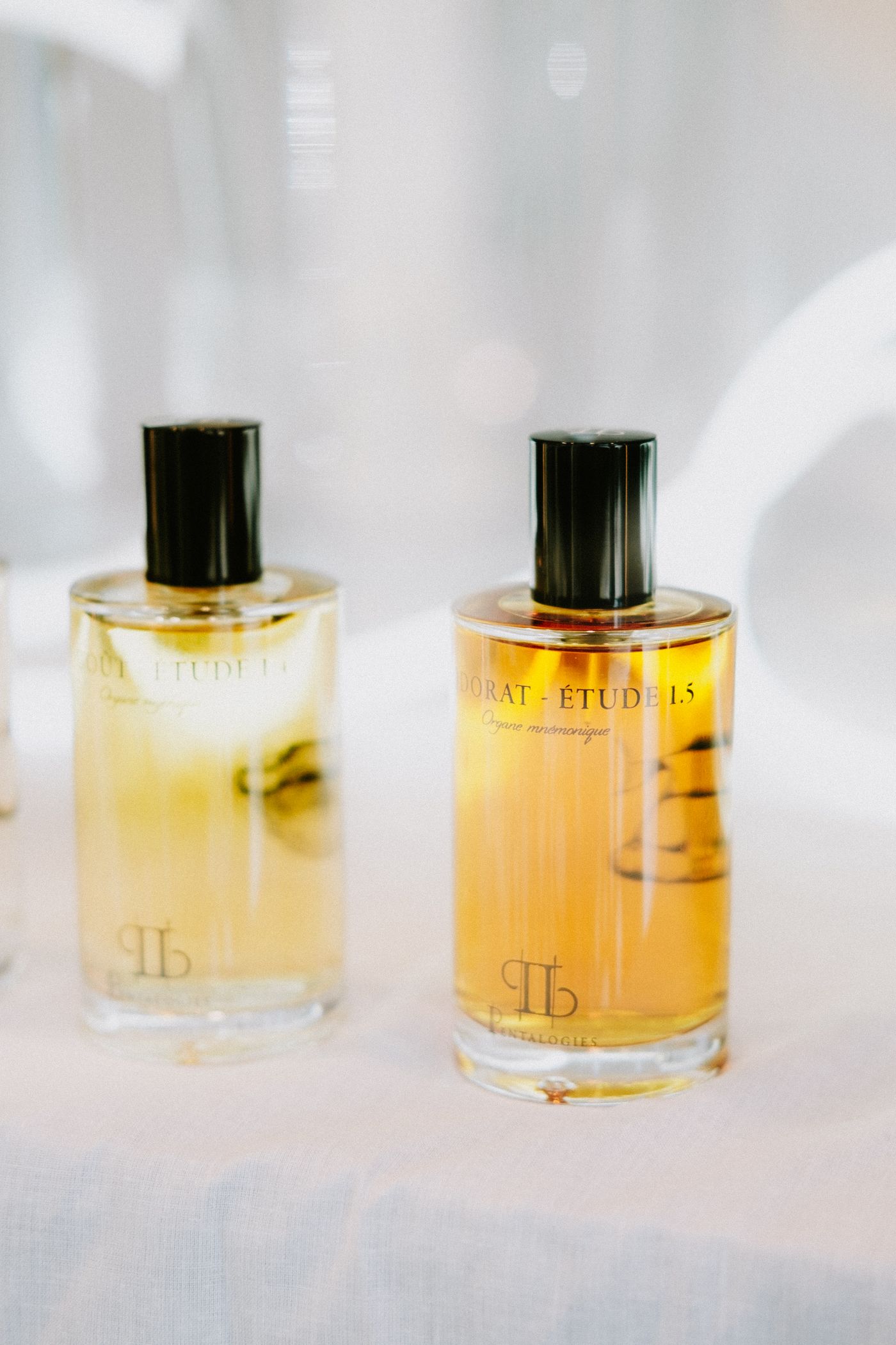
Fragrance is where this matters most, and where it is most consistently ignored. The industry's entire evaluation ritual, a strip of paper, thirty seconds, a decision, is precisely the condition under which mere exposure has had no opportunity to operate and complexity has had no opportunity to reveal itself. What that ritual reliably selects for is the fragrance that is easiest to process on first contact, which is to say the simplest and most familiar one in the room.
The correct protocol is unglamorous. Wear the thing on skin, three separate times, on three different days, and do not decide until after the third. The first wearing is largely noise: you are meeting a new structure with no map, and much of your attention goes to the sheer fact of its novelty. The second is orientation. By the third the shape has become legible and you are finally in a position to judge whether you like it, rather than whether you recognise it.
This is also the explanation for a pattern every serious wearer eventually notices: the fragrances that end up mattering most were frequently disliked at first. Difficult openings, unfamiliar materials, structures that did not resemble anything already owned. They were not better on day thirty than on day one. They were the same, and the perceiver had changed, having accumulated enough exposure to process what was there.
There is a serious hazard here for anyone who makes things, and it runs in the opposite direction. A perfumer works on a formula for months. Their fluency with it becomes total. By the end they can perceive it effortlessly, and mere exposure guarantees that this effortlessness will feel like quality. It is genuinely difficult to tell, from inside, whether a composition is good or merely familiar to its author. This is the entire argument for outside noses, for putting a trial away for six weeks, and for taking seriously the reaction of someone meeting it cold, even when they are wrong about the details.
The same mechanism explains why a house should not chase novelty for its own sake. A range that changes constantly denies its customers the repetition that produces attachment. Nobody develops a relationship with a product that is discontinued before the third wearing. Consistency is not conservatism; it is the precondition for anyone coming to love the thing at all, because liking is built by return visits and return visits require that the object still be there.
Zajonc's finding is usually reported as a curiosity about advertising, which undersells it considerably. What he actually demonstrated is that a meaningful part of what we call taste is a record of where we have already been. Some of what you love, you love because you have met it often. Knowing that does not dissolve the affection, and it should not. It should simply make you slower to dismiss the unfamiliar thing, since your first reaction to it is not a verdict on its quality. It is a report on your own exposure history, and nothing else.