
Waiting for the Frame
Twelve exposures per roll, no burst mode, and a viewfinder you bow into. What the slowest camera teaches the fastest eyes.
The arithmetic of a medium format film camera is designed, by accident of history, to be a discipline. One roll of 120 film gives you twelve frames, sometimes ten, sometimes sixteen depending on the back. Each frame, developed and scanned, costs real money. There is no burst mode, no preview, no delete. Between shots you wind the film by hand, a mechanical breath. The result is that a photographer carrying a Hasselblad or a Rolleiflex or a Pentax 67 makes perhaps twenty exposures in an afternoon where a phone makes four hundred, and comes home, this is the strange part, with more photographs worth keeping.
The cameras themselves belong to the small class of objects this section exists for. The Hasselblad 500C/M is the archetype: a Swedish cube of chrome and leatherette, fully mechanical, modular, film backs, finders and Zeiss lenses all interchangeable, serviceable more or less forever. NASA carried modified Hasselblads to the Moon and left twelve bodies on the surface to save weight, bringing home only the film backs, which remains history's most expensive demonstration that the pictures matter more than the camera. A 500-series body from the seventies, maintained, works exactly as it did new, and will outlive every digital camera released this year.
The waist-level finder deserves its own paragraph, because it changes the social physics of photographing. You do not raise the camera to your eye like a weapon; you look down into a ground glass, bowing slightly, and the subject sees the top of your head instead of a lens where your face should be. Portraits relax. Street scenes continue. The square frame of the 6x6 negative removes even the decision between landscape and portrait orientation, one less choice, one more constraint, and constraints, as every formulator knows, are where style comes from.
What does the waiting actually train? Pre-visualization, to use the old word: the habit of seeing the finished photograph before the shutter fires, because firing is expensive. Film shooters describe walking past scenes and exposing them mentally, saving the frame for the one that survives the internal edit. This is the exact opposite of the modern default, shoot everything, choose later, and it produces a different kind of archive: smaller, harsher on itself, and dramatically more loved. Nobody scrolls a contact sheet of twelve; they study it.
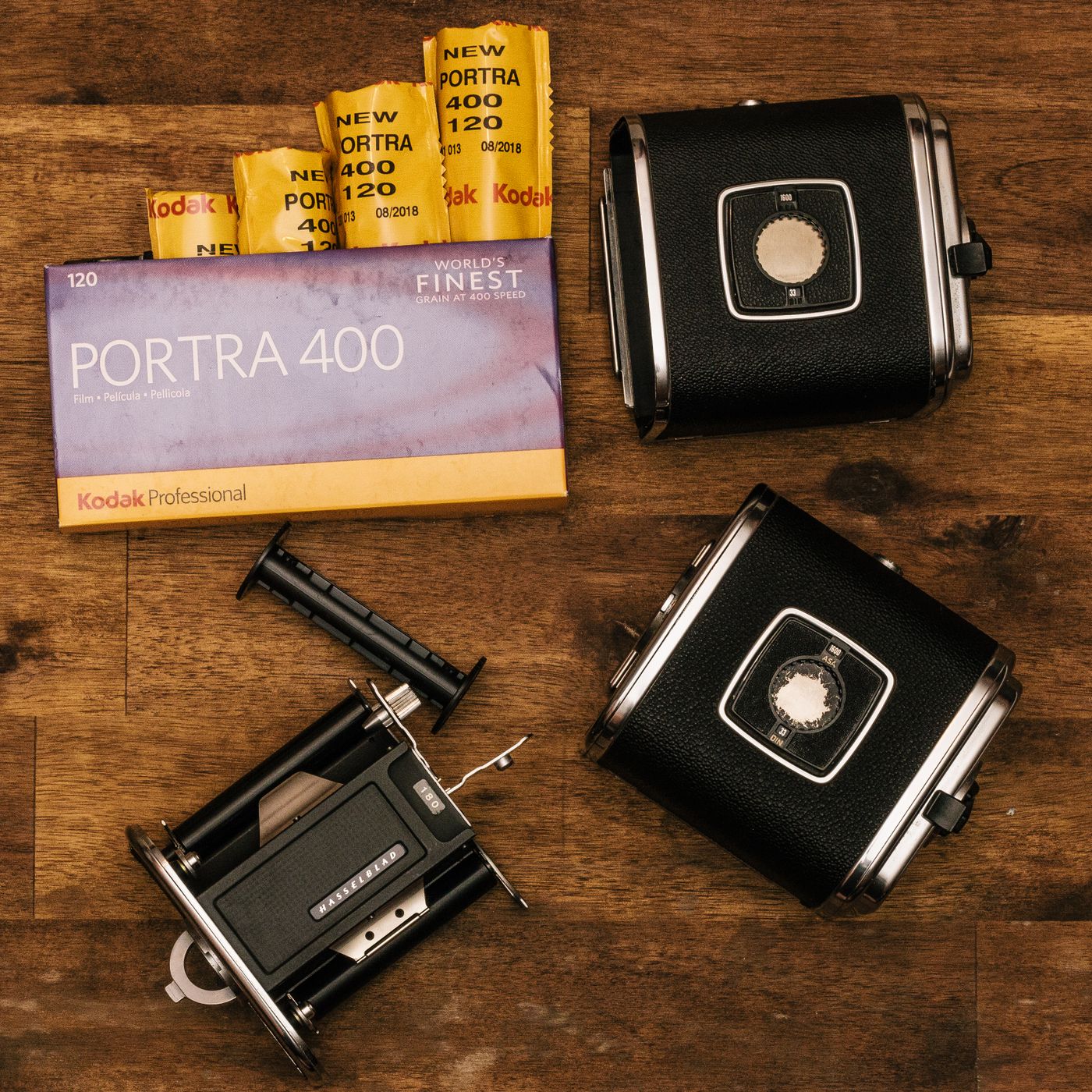
And the negatives justify everything. A 6x6 frame has roughly four times the area of 35mm film, which translates into tonal transitions that digital sensors still chase: skin that turns gently instead of stepping, shadows with structure all the way down, the particular way a medium format portrait separates a person from the background like a held note. This is why wedding photographers kept Hasselblads a decade after digital conquered the newsroom, and why the fashion archive of the twentieth century, Avedon's portraits, Penn's still lifes, is overwhelmingly a medium format archive.
The revival, and there is one, is the grown-up sibling of the digicam wave this journal covered from the sneaker angle. Young photographers are paying real prices for fifty-year-old cubes, film manufacturers have restarted discontinued stocks, and labs in Jakarta that were down to one technician now run backlogs. The motive is the same as the listening bar's: a generation drowning in frictionless capture discovered that friction was carrying something, and went looking for the version with the most friction per gram.
The house's interest is, as usual, professional. Perfume composition is pre-visualization with a nose: materials are expensive, trials take weeks, and the formulator who can smell the finished accord before weighing a gram works like a film shooter, few exposures, high keep rate. The bench and the ground glass teach the same posture, head bowed, breath held, waiting for the frame to be worth the frame. Twelve chances is not a limitation. Twelve chances is a style, waiting to be earned.