
Badminton Is the National Nervous System
A country of nearly three hundred million people, and the sport that carries its collective blood pressure is played with a feathered cork in a hall with a concrete floor.
Barcelona, August 1992. Indonesia had been competing at the Olympic Games since 1952 and had never won a gold medal. That week it won two, on the same day, in the same sport, and both winners were badminton players. Susi Susanti took the women's singles. Alan Budikusuma took the men's. They were already a couple, they married three years later, and the country has never entirely recovered from the neatness of it.
To understand what that meant, you have to understand that badminton was not a surprise. It was the only place the country had ever expected to win anything. Indonesia had taken its first Thomas Cup in 1958, beating Malaya in Singapore, and then proceeded to treat the trophy as furniture. Rudy Hartono won the All England eight times, seven of them consecutively between 1968 and 1974, which remains one of the strangest runs of dominance in any individual sport. By 1992 the nation was not hoping. It was waiting.
The line continued. Taufik Hidayat in Athens in 2004, a singles title won with a backhand smash the sport still argues about. Liliyana Natsir and Tontowi Ahmad in Rio in 2016, mixed doubles, which is the discipline Indonesia treats as a birthright. Greysia Polii and Apriyani Rahayu in Tokyo, the first Indonesian women's doubles gold, won by a player in her thirties who had been written off more than once. Every one of these is a household memory here, and almost none of them registers abroad.
That asymmetry is the first interesting thing. In much of Europe and North America badminton is understood as a garden game, something played barefoot at a barbecue with a bent racket. The perception is so durable that the actual sport, played at elite level, tends to shock people the first time they watch it properly. It is the fastest racket sport in the world. Smash speeds recorded in testing have exceeded four hundred kilometres per hour, which is faster than anything else struck with a racket, and considerably faster than most things struck with anything.
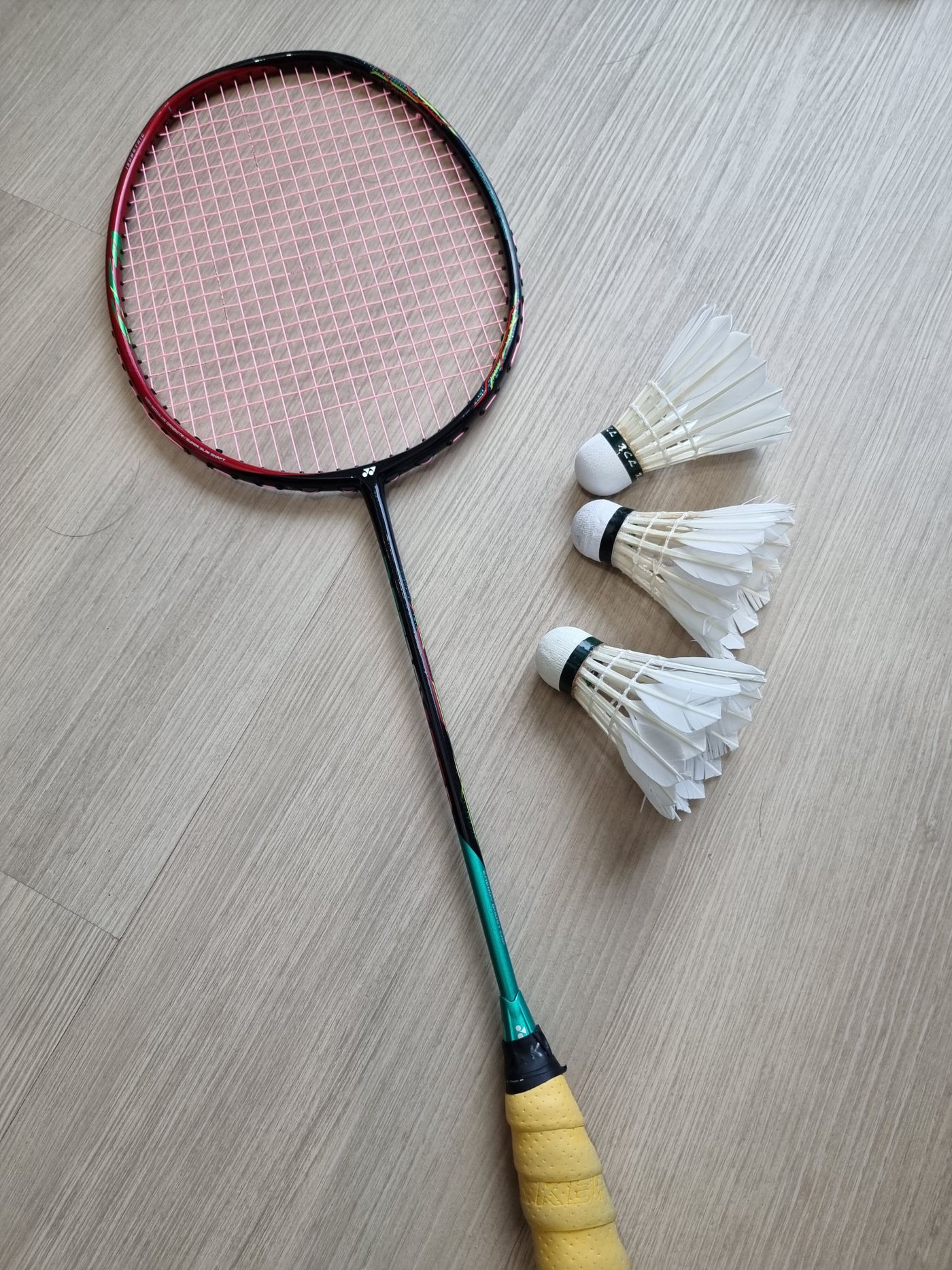
But the speed is not what makes it interesting. The shuttlecock is the only projectile in sport that decelerates violently, because it is a feathered cone with enormous drag, and it leaves the racket at four hundred and arrives considerably slower. It also always turns to fly cork first, no matter how it is struck. The consequence is that the flight path is not a ballistic arc but a curve that collapses, and the same swing can produce a smash that arrives in a third of a second or a drop that dies just over the net.
Which makes badminton, underneath the athleticism, a game about deception. The elite skill is not power. It is producing an identical preparation for four different shots, and reading, from the body of the player opposite, which of the four is coming, in the fraction of a second before the racket moves. Two people stand eleven metres apart and lie to each other with their shoulders. It is closer to fencing than to tennis.
The reasons it took root here are practical before they are romantic. A court is small and can be marked on any flat surface. The equipment is cheap and the shuttlecocks were, for a long time, made locally. It is played indoors, which matters enormously in a country where the afternoon rain is a scheduled event rather than a risk. And it can be squeezed into a gang, the narrow lane between houses, with a net strung between two poles and a rule that a shot into someone's laundry is a let.
That gang court is the actual foundation of the whole apparatus. Not the national training centre at Cipayung, though that matters, and not the club system with its scouts and its dormitories, though that matters more than outsiders realise. The foundation is that in an enormous number of Indonesian neighbourhoods, at dusk and again after dark under whatever light is available, children are playing badminton without adult supervision, learning to read a body and disguise a wrist, decades before anybody assesses them.
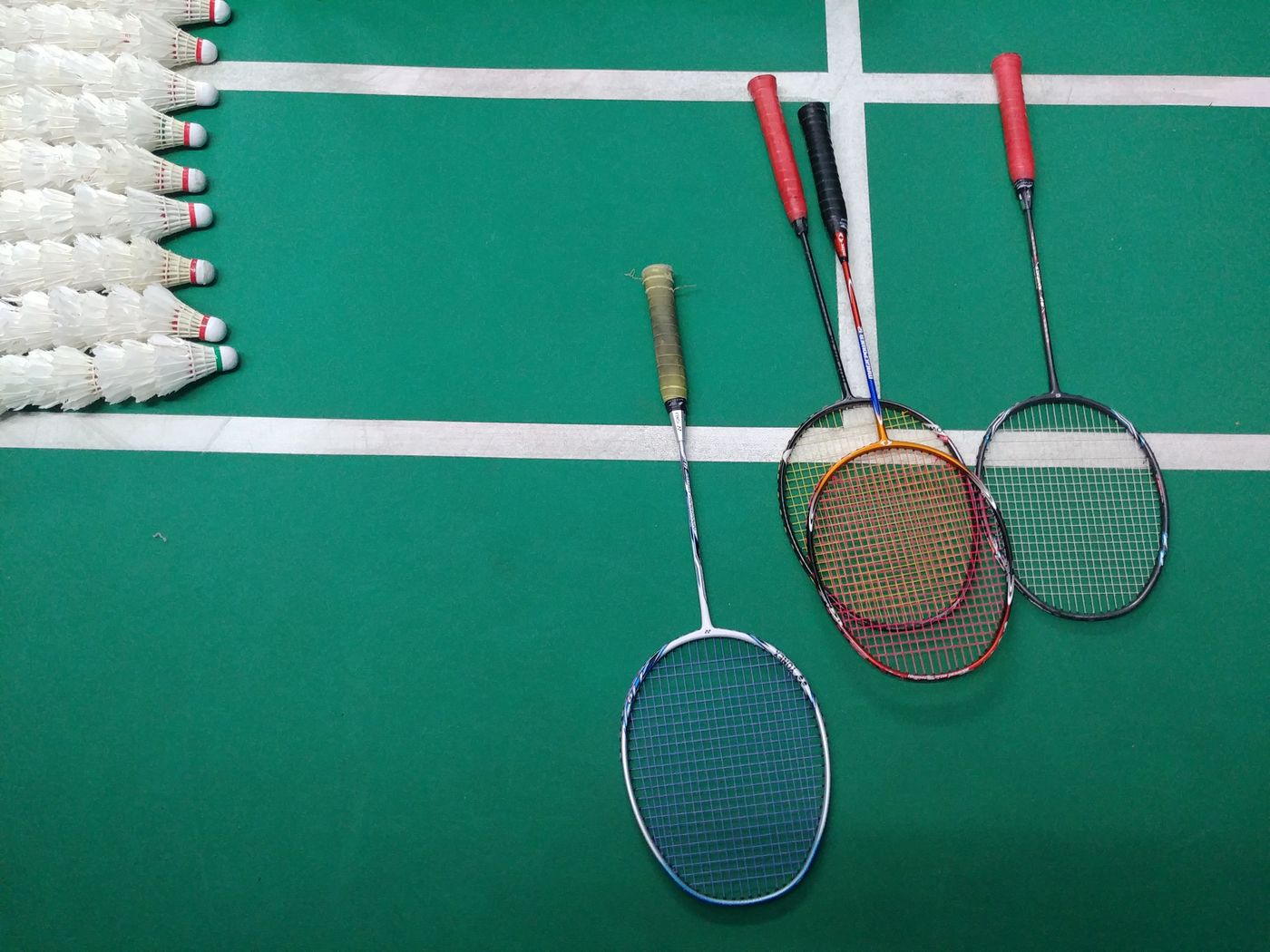
Then there is the sound, which anyone raised here can produce from memory. The particular high crack of a shuttle struck cleanly, quite unlike a tennis ball, followed by silence during the flight, followed by the scuff of shoes on a court. In a neighbourhood hall with a concrete floor and a corrugated roof it echoes. Layer twenty of those over each other on a Friday evening, add the fluorescent light and the smell of balsam and cigarette smoke from the men not currently playing, and you have a sensory signature more specifically Indonesian than almost anything else available.
The national version of that room is Istora Senayan, which for a badminton final becomes one of the genuinely great sporting environments anywhere. Not the largest, not the newest, but loud in a way that is frequently remarked on by visiting players, because the crowd understands the sport at a technical level. They react to a deception before the point ends. That is a rare thing, an entire arena of people who can read a feint, and it exists because the sport is not a spectacle here. It is a shared literacy.
None of which makes the system healthy by default. The club and academy pipeline demands that children leave home young and gives most of them nothing, since the pyramid is brutally narrow. Funding follows medals rather than participation. And a country that hangs this much collective identity on one sport puts real weight on the shoulders of a small number of very young people, who then carry a national mood into a match that is, in the end, a game.
Still, when the Thomas Cup or an Olympic final is on, the country does something it does for very little else. Warung televisions get turned around to face the street. Traffic thins. People who cannot name a single other athlete watch three hours of a sport most of the world thinks belongs at a picnic, and they watch it knowledgeably, and when a rally ends well an entire neighbourhood makes the same sound at the same moment. Whatever else a national nervous system is, that is what it looks like when it fires.