
Jamu, the Drinkable Memory
Turmeric, tamarind, and the bottle lady's rounds. The archipelago's herbal tradition, from palace pharmacopoeia to the cafe menu.
The sound comes first, in the memory of anyone raised in a Javanese neighborhood: the soft clink of glass bottles in a woven basket, and the call of the mbok jamu on her morning round. The jamu gendong, the carrying-cloth jamu seller, walked the lanes with a rainbow strapped to her back, eight bottles or so, each a different preparation, and dispensed them by the glass with diagnosis included: this one for fatigue, this one for the complexion, this bitter one, drunk fast, for everything you did last night. She was pharmacist, therapist, and morning ritual in one person, and though she now often arrives by motorbike, she still arrives, which in 2026 is itself remarkable.
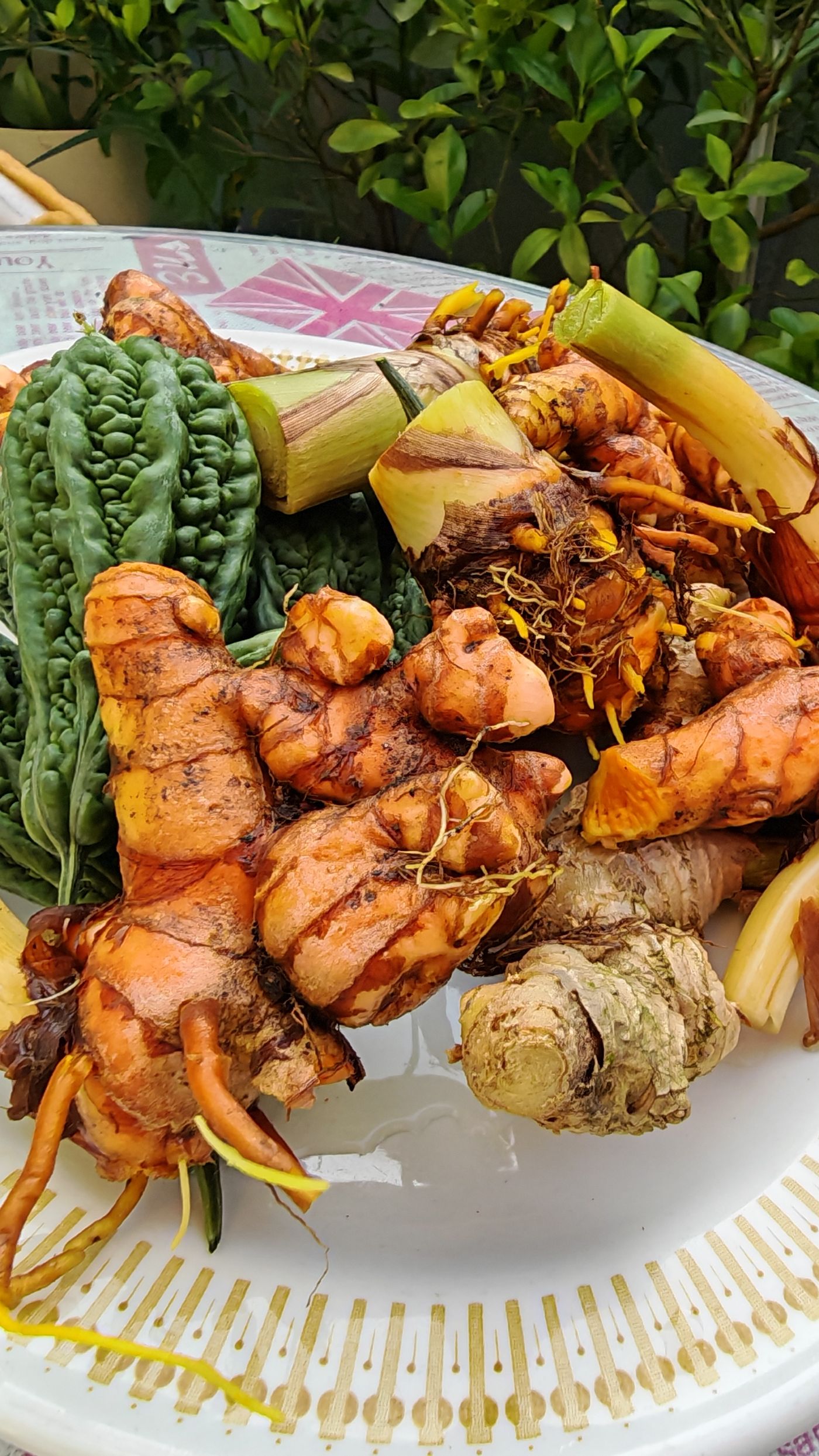
Jamu is the archipelago's herbal tradition entire: turmeric, ginger, galangal, kencur, tamarind, cinnamon, honey, lime, worked into tonics by recipes that families and villages hold in versions, like folk songs. The lineage runs deep and documented, reliefs at Borobudur show plant-medicine preparation twelve centuries ago, and the palace traditions of Yogyakarta and Surakarta refined household knowledge into a court pharmacopoeia whose recipes still anchor the canon. In 2023 UNESCO inscribed jamu wellness culture on the intangible heritage list, which changed nothing in the kampung and validated everything: the world's committees finally caught up to the mbok's basket.
The canon deserves a tasting note, because jamu is a flavor education before it is a medicine cabinet. Kunyit asam, turmeric and tamarind, is the gateway: golden, sour-bright, faintly earthy, the one the cafes pour now over ice. Beras kencur, rice and aromatic ginger, is sweeter, milky, almost a dessert with opinions. Temulawak, from the wild ginger cousin, runs deeper and more medicinal; pahitan, the bitter one built on sambiloto leaf, is a rite of passage that rearranges the face, always chased by a shot of something sweet, the seller's built-in mercy. The sequence, bright to bitter to sweet relief, is a composition, and the mbok pours it in order like a bartender who has read the long-table essay.
A perfumer reads the jamu basket as a colleague's kit, because it is one. Turmeric, ginger, galangal, and kencur are all aromatic rhizomes, underground stems packed with volatile oils, and several are perfumery materials outright: ginger's bright zing in colognes, turmeric's woody-spiced facets, the peppery camphor of galangal. The mbok's morning basket and the house's bench draw from the same soil, sometimes literally the same market stalls, and both trades run on the same conviction, that roots hold concentrated character and that extraction is a craft. Jamu is, structurally, perfume you drink: botanicals, macerated and blended by nose and memory, dosed for effect, sold with a story.
On the science, the house takes the honest middle. Some of jamu's pharmacology has survived the laboratory handsomely, turmeric's curcumin and ginger's gingerols are heavily studied, and temulawak is the subject of a national research program; other claims live where all folk medicine lives, in the untestable territory between chemistry, care, and belief. But the section's frame is the right one: judged purely as ritual, jamu already earns its keep. A glass of something warm and bitter, prepared by known hands, drunk at a fixed hour with a diagnosis and a chat, delivers benefits no placebo trial can isolate because they are not placebo, they are structure, attention, and being asked how you slept. The medicine may be partly the molecule. The ritual is entirely real.
The revival is in full pour, and the house watches it with the same eye it turned on matcha. Jakarta's cafes list kunyit asam beside the cold brew; boutique jamu bars serve it in stemware with tasting notes; wellness brands bottle pasteurized versions with typography this journal would praise in another section. Most of it is sincere, some of it is costume, and the test is the one this journal always applies: does the new form still know it is a ritual, a daily rhythm with a person in it, or has it become merely a beverage with antioxidants? The mbok's basket contained a relationship. The refrigerator shelf contains a SKU. The drink survives either way; the tradition only survives one of them.
Practice: find your neighborhood's jamu seller this week, there is one closer than you think, or make kunyit asam yourself, fresh turmeric, tamarind pulp, palm sugar, a squeeze of lime, and take it at the same hour daily for a week. Note what the turmeric does to your cutting board, your fingers, and your sense of the morning. The stain is the point: jamu colors what it touches, hands, glasses, days, memory. The house has been trying to bottle that exact property, in another medium, since it opened.