
Kopi Tubruk, Unfiltered
Boiling water, ground coffee, sugar if you mean it, and nothing between you and the cup. A defense of the mud.
The method is the whole recipe: put finely ground coffee in a glass, add sugar if your grandmother did, pour water just off the boil directly on top, stir once, and wait. The grounds bloom, swirl, and settle into a dark sediment at the bottom. No filter, no machine, no paper, no technique that cannot be taught in one sentence to a child. This is kopi tubruk, the default coffee of Java and Bali for generations, and its name is usually traced to the idea of collision, the water crashing into the grounds. Everything in the glass, colliding, nothing removed.
The house is aware of what the specialty decade has to say about this. Unfiltered contact brewing extracts without mercy; the fines stay suspended; the last third of the glass is silt; the method blurs the delicate florals that a V60 was engineered to display. All true, and all beside the point, because tubruk was never trying to display anything. It is a different philosophy of the same plant: where the pour-over treats coffee as a lens to be polished, tubruk treats it as a fire to sit beside. Body over clarity, duration over brightness, presence over analysis.
Its cousins hold court across half the world, and the family is distinguished. Turkish coffee, simmered in the cezve, so central to that culture that it entered UNESCO's intangible heritage list. Greek and Bosnian variants of the same. Vietnamese ca phe with its slow metal drip. Ethiopian buna, roasted, pounded and boiled in the jebena in the ceremony that stands at coffee's origin point. Everywhere coffee is old, the unfiltered methods survive, and everywhere they survive, the drink comes attached to a social contract: you cannot rush a cup that needs its grounds to settle. The sediment is a built-in sobremesa, this journal's favorite institution, enforced by physics.
The sensory case, made without apology. Tubruk made with a good Indonesian bean, a Toraja or a Gayo, wet-hulled, heavy, low in acid, is not a compromised pour-over; it is the presentation those beans were unconsciously bred for. The weight doubles. The chocolate goes darker. The earthy base, the forest-floor note the paper filter politely confiscates, arrives intact, riding the fine particles that never fully settle. The glass has texture, an actual mouthfeel gradient from first sip to last, and the final sip, taken carefully above the mud line, is the strongest and sweetest sentence in the whole story. A pour-over is a single held note. A tubruk is a drydown.
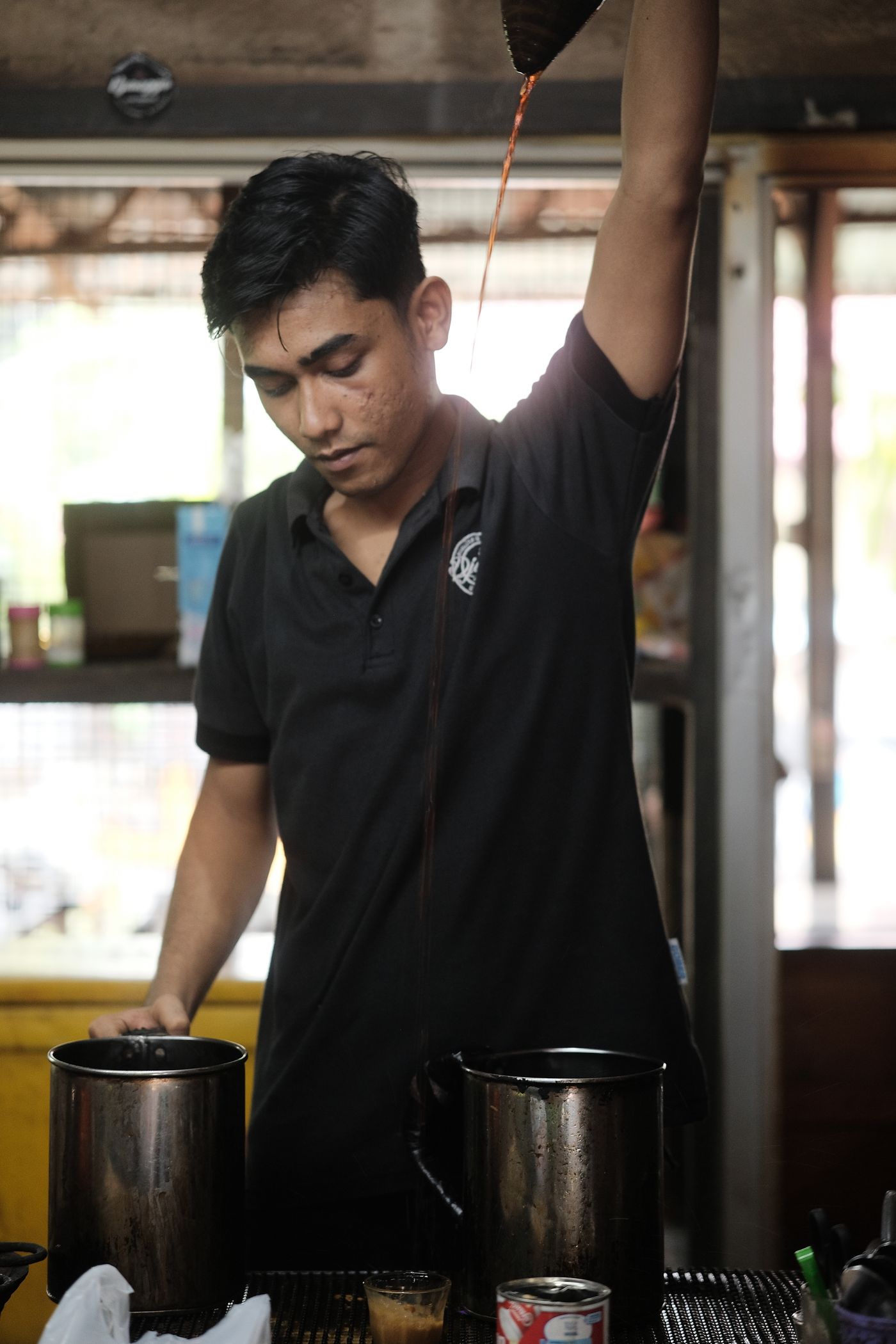
There is also the arithmetic of dignity. A tubruk needs a glass and a kettle, which means the best cup in the village and the best cup in the tower apartment are separated by nothing but the bean. No thousand-dollar espresso machine, no gooseneck kettle, no scale, no subscription. The warung on the corner serves a brew method identical to the one in the design hotel, and frequently executes it better, because the auntie behind the counter has made forty thousand of them. In a coffee culture increasingly gated by equipment, the most democratic serious cup in the world is the one with mud at the bottom.
Technique, since the house has opinions: grind finer than filter but not to dust; water thirty seconds off the boil, never at it, scorched tubruk is the method's one real failure mode; stir once at the pour and never again; wait a full four minutes, which is the hard part; and drink it in thirds, because the glass changes as it goes, and the change is the entertainment. Gula batu, rock sugar, belongs in the bottom for those who take it sweet, melting upward through the drink like a slow dawn.
The matcha essay in this section watched a ceremony survive its own fashionability. Tubruk poses the inverse question: whether a method can survive being beneath fashion's notice, and the answer, visible at every warung at six in the morning, is that it never needed the votes. The third-wave shops of Jakarta have lately begun listing tubruk on their menus, priced like a pour-over, served in nicer glass, and the house permits itself one smile per sighting. The mud was the point all along.