
Rotterdam, from Memory
Some cities you visit. Some you keep. This is the one the house keeps.
Every perfumer has one city filed deeper than the others, the one that surfaces uninvited in formulas years later, and the house may as well confess its own: Rotterdam. Not Paris, where this trade keeps its headquarters, and not Tokyo, where this journal keeps its heroes. Rotterdam, the port at the mouth of Europe, where the Maas goes silver at six in the evening and the wind arrives with the North Sea still on it. The house lived a chapter there once, long enough for the city to get into the base notes, and this entry in the Travelogue is written the way the section demands: not as an itinerary, but as what the skin remembers.
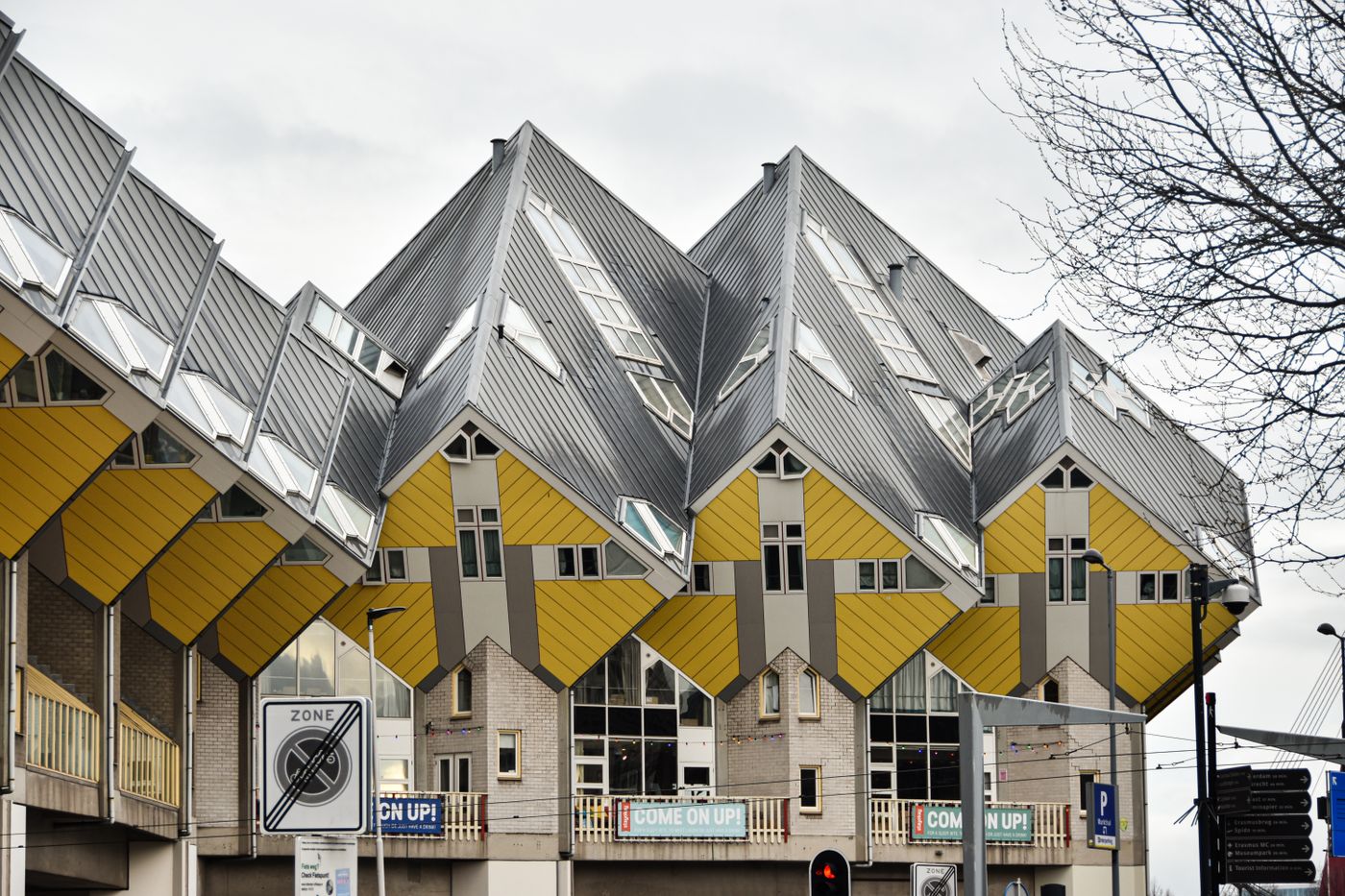
To understand the city you must start with the wound. In May 1940 the old center was bombed flat in a single afternoon, six centuries of brick erased before dinner. Nearly any other European city would have rebuilt what was lost, stone by nostalgic stone. Rotterdam looked at the empty ground and decided, with a stubbornness that still astonishes, to build what came next instead: towers, experiments, a skyline unlike anything else in the Netherlands. The cube houses tilted on their corners like dice mid-throw. The Markthal, a horseshoe of apartments arched over a food market, its ceiling a cathedral fresco of produce. The Erasmus Bridge, one white pylon leaning into the wind, so obviously alive the city calls it the swan.
The memories the house keeps are not the landmarks, though. They are the hours. The walk home across the bridge when the light had gone low and gold and every cyclist became a silhouette. The market on Saturday, stroopwafels pressed warm, herring taken standing up like a local, the Surinamese and Indonesian stalls proving the city's harbor history in sauce and spice. Coffee in cafes where the windows steamed against the cold and nobody hurried you out. And underneath everything, always, the harbor wind: the smell of cold water, tar, diesel and distance, the smell of a city whose front door is the sea.
That wind deserves its own paragraph in a fragrance journal. Harbor air is a composition: salt and ozone on top, wet rope and rust in the heart, silt and old timber in the base, and the house has been trying to bottle its Rotterdam vintage for years without admitting it. The city smells of work and weather in equal measure, and after the tropics it taught the nose a whole cold register: air with no jasmine in it at all, and somehow still full. Readers of the petrichor essay know the house believes weather is the oldest perfumer. Rotterdam is where it learned that lesson in a coat.
There is a family connection under the nostalgia, older than the house itself. Rotterdam was the far end of the line for the ships of the colonial spice trade; the wealth in its old ledgers is the same story our Melaka essay told from the loading side. An Indonesian standing on the Wilhelminapier is standing where the nutmeg landed, with all the weight that history carries both ways. The city holds one of Europe's great Indonesian communities and some of its best rijsttafel, and eating rendang within smell of the Maas is a strange, complete sensation: both ends of a four hundred year old rope, held in one evening.
What the city teaches, beyond the ache of it, is the most useful lesson resilience has ever offered this house: identity does not live in the buildings. It lives in the temperament. The bombing took every stone and left the character standing, direct, unsentimental, allergic to pretension, fond of saying that money is earned in Rotterdam while it is spent elsewhere. The city rebuilt itself as pure forward motion and somehow remained utterly itself. Anyone rebuilding anything, a business, a life, a formula that failed at the eleventh trial, could do worse than study how.
The house has not been back in some years, and chooses not to update the file. The Rotterdam it keeps is specific: a bridge at dusk, a paper cone of warm stroopwafel, wind with the sea on it, the tram bell two streets over. Memory, this journal keeps arguing, is a perfumer's raw material, and the rule of the trade is that you do not adulterate a good vintage. Some cities you visit. Some you keep, at one particular temperature, forever.