
Why Everything Looks Like Wong Kar-wai Now
A cinema of longing became a filter. What got lost in the compression.
You have seen it this week, whether you knew its name or not. The saturated reds and greens. The slow motion through cigarette smoke. The lonely figure under neon, rain-wet street doubling every light. It was in a coffee advertisement, a pre-wedding video, a fashion reel, a café’s interior design brief. A quarter century after In the Mood for Love, Wong Kar-wai’s images have gone the way of denim: so universal that nobody remembers they were once one man’s workwear.
The look was never just a look. It was built by Wong and his cinematographer Christopher Doyle out of constraint and patience: cramped Hong Kong interiors that forced the camera into corridors, shoots that ran for years without a finished script, step-printing that smeared time because the films were about time smearing. The color was not a grade applied at the end. It was the emotional temperature of rooms where people wanted each other and said nothing.
That last part is what the filter cannot carry. In the Mood for Love is a film in which the two leads never so much as kiss on screen, where the most devastating scenes are rehearsals of conversations that never happen, where desire is expressed almost entirely through what is withheld: a brushed shoulder in a stairwell, a glance held one frame too long. The imitations keep the neon and lose the withholding. They borrow the color of longing and skip the longing, which is like bottling the color of a perfume.
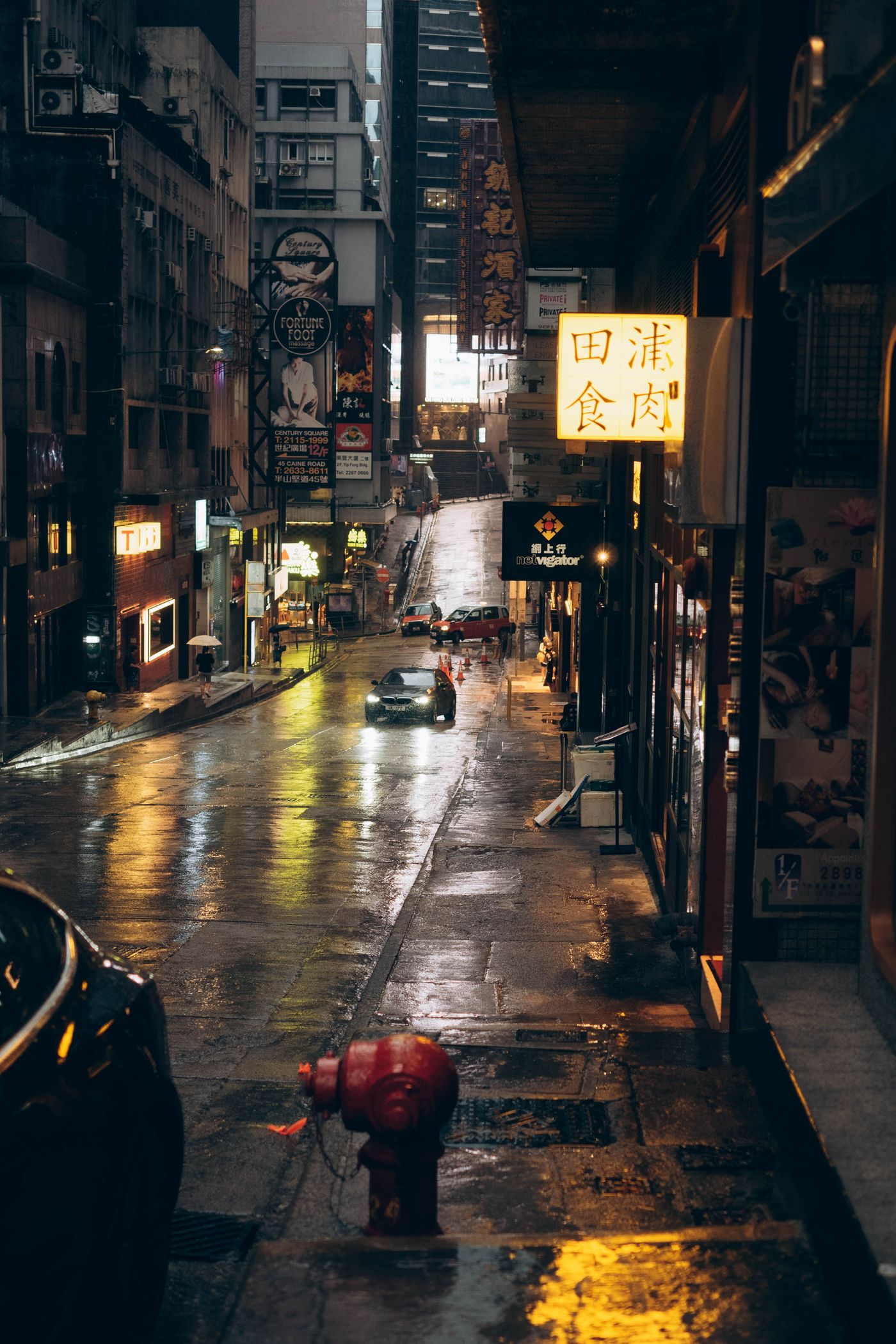
None of this is a complaint about influence. Wong himself built from Manila pop songs, Latin boleros and borrowed cheongsams; port cities make their art from cargo, and Jakarta understands that instinctively. The interesting question is why this particular grammar conquered Asia’s image-making so completely. Probably because it solved our exact problem: how to make dense, humid, crowded cities look like places where feeling happens. Wong proved the corridor of a cheap building could hold as much romance as any Paris boulevard. Every city that recognised its own corridors in his frames adopted him on the spot.
The film sits in the house’s Index, filed under what the eye keeps. Here is what it keeps, once the filter is scraped away: that beauty is mostly a matter of what you decline to show, that a rain-wet street at night is the most honest mirror a city owns, and that the deepest feelings travel in the smallest gestures. A house that sells scent has obvious sympathies. Perfume is also worn in corridors, also speaks in glances, also works best when it withholds.
So watch it again, properly, lights off, phone in the other room. Notice how little happens and how much it costs. Then go back to the reels and see the difference for yourself: everything looks like Wong Kar-wai now, and almost nothing feels like him.