
Haze Season
The ugly season, written honestly: burnt peat, grey noons, and what a bad-smell year teaches a working nose.
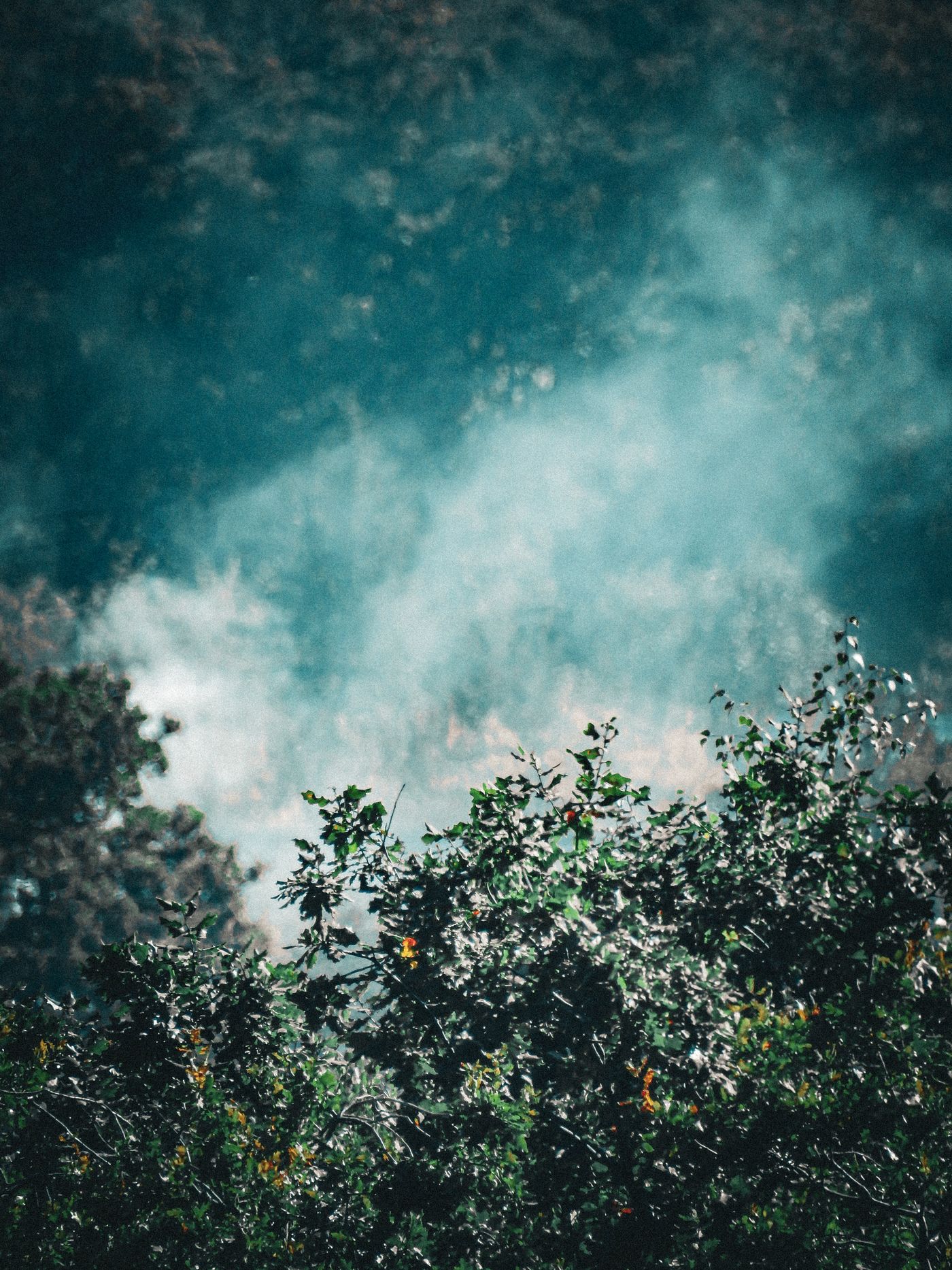
A weather section that only praised its subject would be a brochure, and this journal does not write brochures. So here is the season nobody frames: the haze. In bad dry years, especially the El Nino years when the kemarau runs long and hard, the peatlands of Sumatra and Kalimantan burn, some fires set for cheap land clearing, some smoldering relit from fires years old, because drained peat burns underground, meters deep, and can survive the rain that ends the surface season. The smoke rises, the east winds spread it, and for weeks a third of Southeast Asia lives inside a grey ceiling: flights grounded, schools closed, the sun reduced to a coin you can look at directly, and the smell, everywhere, of the world's oldest stored carbon coming un-stored.
The nose knows this smell before the news names it. It is not campfire. Wood smoke is bright, resinous, almost festive, the smell of warmth on purpose. Peat smoke is flat, acrid, damp-sour, smoke with the sweetness removed, because what is burning is not wood but thousands of years of compressed swamp, roots and moss and drowned forest that never finished becoming coal. It arrives first as a wrongness at the edge of attention, a morning that smells like an ashtray left in the rain, and settles into everything: laundry, hair, the inside of cars, the back of the throat. The 2015 event, the worst in modern memory, pushed air quality indices past what the scales were built to measure and released more carbon on bad days than entire industrial economies. This is the region's weather too. Honesty requires the entry.
What does a perfumer do in a haze year? First, professionally: stop. A working nose in dirty air is a violinist with gloves on; test strips lie, macerations get judged unfairly, and the season's real lesson is that the craft's most basic input, neutral air, was never guaranteed and never noticed while it was free. The house keeps what it calls its haze rule, formulated in a bad September: no final verdicts on grey days. Second, curiously: pay attention anyway. The haze is a masterclass in a material this trade romanticizes. Smoke is a treasured perfume note, birch tar, cade, incense, lapsang facets, and living inside the untreasured version for a month recalibrates the romance. The difference between smoke as accent and smoke as atmosphere is the difference between a fireplace and a burning library, and a nose that has smelled both doses the note differently forever after.
The haze also teaches by subtraction, the way illness teaches health. In a thick week, the smellscape this journal spends its life cataloguing simply goes missing: no petrichor under the sealed sky, no morning bread, no frangipani on the evening walk, no neighbor's frying garlic, all of it flattened under one grey note. People who claim smell is the dispensable sense should be issued one haze season. What returns when the rains finally break the fires, and the first clean morning arrives like a window thrown open, is not just air quality. It is the entire background orchestra of ordinary life, and for about three days everyone in the region can hear it, and is briefly, involuntarily grateful in a way this house works full time to reproduce.
The politics can be stated from a bench without a lectern. The haze is transboundary, Singapore and Malaysia breathe Indonesian fires, and the region has treaties about it; it is economic, cleared land is somebody's palm oil margin; and it is soluble, wet years and enforcement years prove it, the fires respond to weather and to seriousness in roughly equal measure. The house buys Indonesian agricultural materials for a living and declines to pretend its own supply chains float above the problem: land use is one story, and perfume's patchouli and the haze's palm oil are chapters of it. Buying carefully, from growers whose land practices bear looking at, is the lever a small house actually holds, so that is the lever it pulls.
There is even, whisper it, an aesthetic entry in the ledger. Haze light is terrible and extraordinary: noon like dusk, the sun a clean red disc, distances erased so the city floats in planes like a scroll painting. Photographers work the bad weeks guiltily. The house understands the guilt and files the observation anyway, because this section's founding principle is that weather is information, all of it, and a complete sensory record of a place includes the years it hurt to breathe there. The gold light essay and this one describe the same wind in different years. That is the whole truth of the kemarau, and the journal keeps whole truths.
No cheerful practice section this time; the practice is masks, air purifiers, checking on old neighbors, and wanting better land policy with whatever citizenship you hold. Just the season's lesson, earned the hard way: clean air is the first material of every craft this journal loves, the unlisted ingredient in the coffee, the perfume, the morning walk, the whole calendar. The haze years are the invoice for treating it as free. Smell everything, this journal keeps saying. Some years, the archipelago replies: then take care of the air.