
Dry Season Light
July's gold hour, dust in the air, cloth on the line. Why the house dates itself by the dry season, and what the east wind is for.
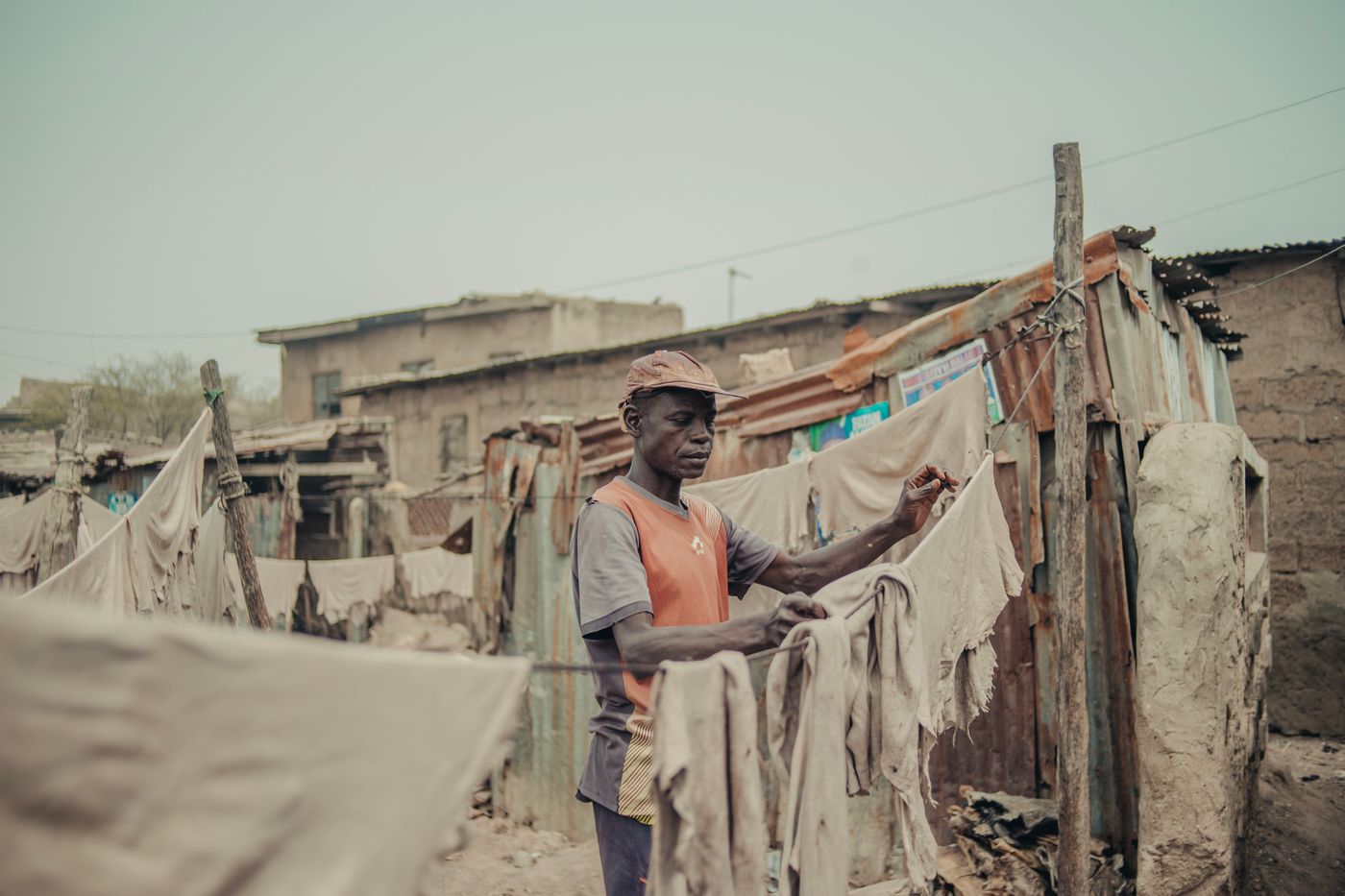
Readers who inspect the Taste hub's masthead will find the journal established in the dry season of 2026, and the dating is not decoration. On this archipelago the dry season, musim kemarau, roughly May into September when the east monsoon blows up from Australia, is the season of finishing. The wet season grows things; the dry season completes them. And its signature, the thing this essay exists to praise, is the light: a specific deep gold that arrives in the late afternoons of July and August, when the air carries fine dust instead of water, and every wall, face, and laundry line in the country gets ten minutes of being lit like a painting.
The optics are simple and worth knowing. Wet-season air is washed clean; light comes through it white and hard, and the afternoons build toward the grey theater of rain. Dry-season air fills with particles, field dust, road dust, the smoke of burned rice stubble, pollen, and particles scatter the short blue wavelengths out of the beam, letting the long golds and reds through. The same physics that makes desert light famous and volcanic sunsets lurid gives the kemarau its trademark hour. Photographers call the effect golden hour everywhere on earth; here the season extends and deepens it, gilding whole months. It is dirty air, honestly described, and it is beautiful, and this journal has made peace with the fact that those two statements often travel together.
The season's real work is desiccation, and the whole culture participates. This is the season when the archipelago lays itself out to dry: laundry lines sagging in every yard at ten in the morning and crisp by two, krupuk on racks outside the warungs, fish split and salted on the north coast beaches, cloves spread on tarpaulins along village roads so the whole street smells like a spice drawer, rice on the roadside asphalt itself, raked into stripes, drivers steering around the harvest. Cocoa, copra, coffee: the Gayo beans this journal has praised dry on patios in exactly this weather, and their character is finished by the same sun that finishes the laundry. The dry season is when water leaves things, and flavor, scent, and crispness are so often what remains after water leaves.
The perfumer's stake in this is direct. Patchouli leaves are dried before distillation, and the drying weather writes itself into the oil. Benzoin trees are tapped and the resin hardens in dry air. The great batik houses time their wax work and dyeing around humidity. Even at the bench, the dry months change the craft: alcohol behaves, macerations settle, test strips read cleaner in air that is not already full of water. The house's productive season maps onto the kemarau so reliably that the founding date on the masthead is less a birthday than a job description. Things get finished here in the dry season, including the house itself.
There is a temperament to the season worth recording alongside the physics. Wet-season life is interrupted life, plans made with an escape clause, the sky consulted before every departure. The kemarau removes the clause. Evenings can be promised. Weddings, festivals, and long dinners on terraces cluster into these months, as the calendar essay noted, and a kind of collective exhale runs through the reliable weeks: the sky, for once, has signed a contract. The cost is real, wells drop, fields crack, the east islands go brittle waiting for rain, and by September everyone is checking the west horizon with intent. The dry season teaches the tropics' central lesson twice a year: every relief is a countdown.
The light deserves one more paragraph, because the house believes in practicing what it praises. Dry season gold is brief daily, the last ninety minutes before sunset, and it rewards ritual: the Kyoto essay argued for the world before nine in the morning, and this one argues for the tropics after four in the afternoon. Take the walk then. Sit on the west side of the house. Watch what the gold does to ordinary things, a zinc roof, a drying sarong, a neighbor's wall, because the season's genius is precisely that it glorifies the ordinary on a schedule. No monument required. The laundry will do.
Practice: pick one week of the deep kemarau and dry something yourself, properly, in the sun, cloth, chilies, whatever your household produces, and smell it afterward against its machine-dried equivalent. The difference is the season, recorded. That difference is also roughly what this house does for a living: arrange for time and weather to finish what hands began. The journal was established in the dry season because that is when this archipelago signs its work. The gold light is the signature.