
Nolan Builds Backwards
Films assembled like watch complications: backwards, from the moment the hands must meet.
There is a certain kind of craftsman who begins at the ending. The watchmaker building a complication starts from the instant the hands must meet, then works backward through gears and escapements until the beginning is simply whatever the ending required. Christopher Nolan has spent thirty years making films this way, and the house, which composes perfumes from the drydown backward, has always suspected him of being a colleague.
Consider the record. Memento runs its story in reverse because its subject is a man who cannot hold time. The Prestige is a magic trick about a magic trick, its final image the first one, reconsidered. Inception nests time inside time like gear ratios, a minute here becoming an hour there. Interstellar bends a father's years against a daughter's minutes. Dunkirk runs a week, a day, and an hour simultaneously and lands them on the same beach. Even Oppenheimer is two clocks, color and monochrome, ticking toward one desert morning. One director, one subject: time, folded until it fits in a pocket.
The common accusation is coldness, and the house rejects it on the evidence. Nolan's engineering is not the opposite of feeling; it is the delivery mechanism for it. The corridor fight and the docking scene exist so that a father can watch his children age in a video message and break in half. The structure earns the emotion the way a fugue earns its final chord: the feeling lands because the architecture spent an hour building the room it lands in. Sentiment without structure is syrup. Structure without sentiment is scaffolding. He is one of the few working at scale who insists on both.
There is also the matter of stubborn materials. Film stock over digital, IMAX cameras heavy as outboard motors, real corn fields, real rotating corridors, a real Spitfire. In an industry that renders everything, Nolan keeps buying atoms, and audiences can feel the difference without naming it, the way a nose can tell real sandalwood from its molecule. Our film photography essay made the same argument at hobby scale: constraint chosen on purpose is not nostalgia, it is a quality control system.
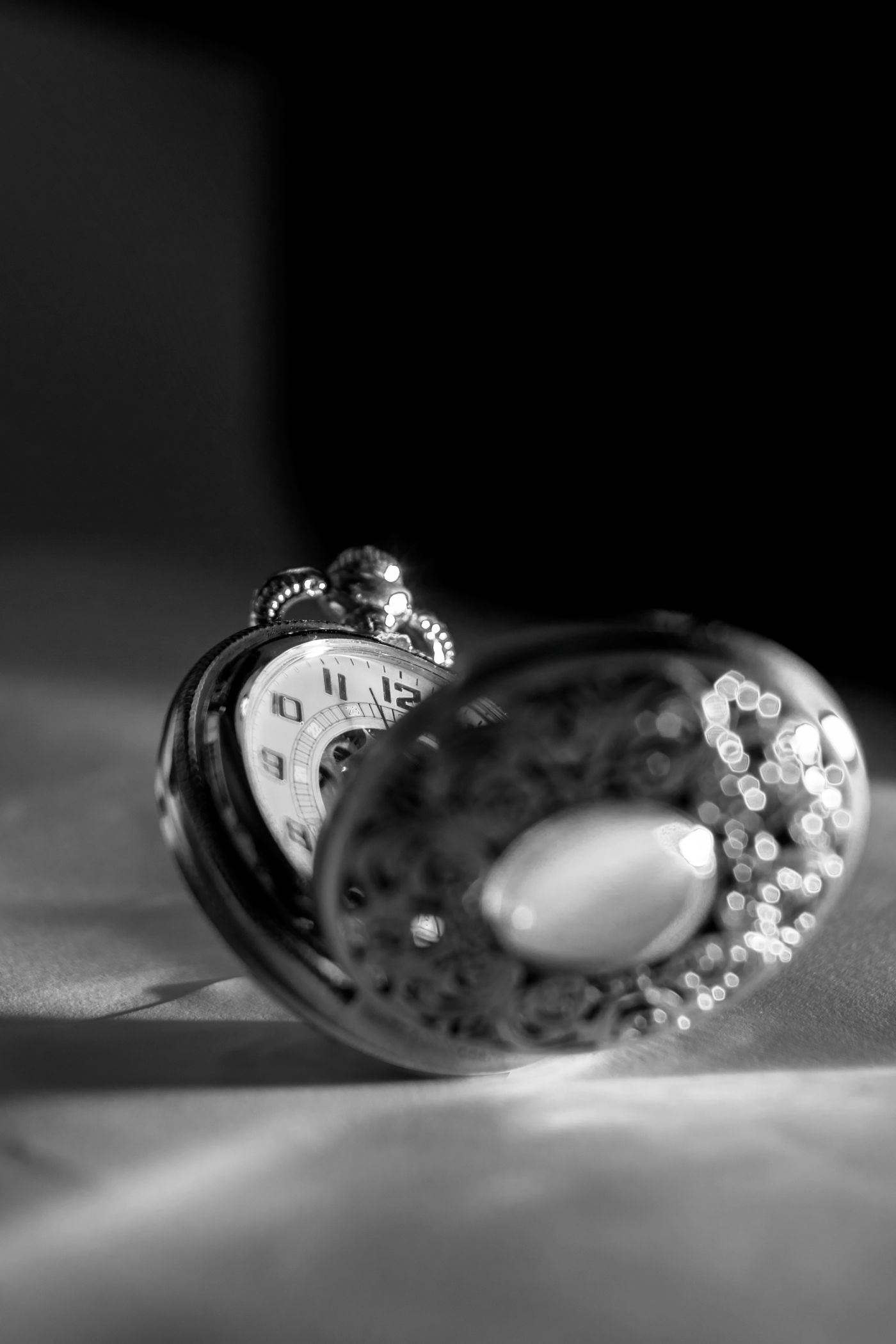
The house watches him the way it reads formulas, and the professional lesson is always the same: begin at the ending. A perfume is experienced forward, top note to drydown, but it must be composed backward, because the drydown is the promise everything else is allowed to make. Nolan writes his endings first and lets them tax every scene that precedes them; the bench writes its base accord first and lets it tax every material above. The audience meets the work in one direction. The maker must have already traveled the other.
His real theme, under the clockwork, is the one this whole journal orbits: memory as an unreliable instrument that we nevertheless navigate by. Leonard's polaroids, Cobb's spinning top, Murph's watch, the fisherman's returning nightmare on the beach: every Nolan protagonist is somebody trying to verify a memory with an object. The house sells exactly that service in bottles, and readers of the Kon essay will recognize the two directors as opposite answers to the same question: Kon dissolves the boundary between memory and present; Nolan builds gauges to measure it.
Where to start, for the reader who knows only the blockbusters: The Prestige, for the confession hiding in plain sight; then Interstellar, watched once for the physics and once for the bookshelf; then Dunkirk with the volume high, as pure duration. Notice, each time, the moment the separate clocks land together, that click of a mechanism closing. It is the most satisfying sound in modern cinema, and it is the sound the house listens for at the bench when a formula finally locks: everything arriving, from different distances, at the same instant.