
The Barbershop Half Hour
Hot towel, talc, the drape, the chair. The last place men routinely sit still, and the thirty minutes no technology has managed to kill.
The Rituals section opens in a chair, because the chair is where the argument is easiest to see. A ritual, for this journal's purposes, is a small ceremony that repeats: fixed steps, fixed order, a beginning and an end, performed not because the steps are efficient but because the repetition itself does something. The barbershop half hour qualifies on every count. The drape snapped open like a matador's cape and settled at the collar. The comb and the first cold spray. The clipper's drone, the scissors' dry conversation, the tilt of your own head by another person's hand, a touch grammar that exists nowhere else in adult life. Then the finishing liturgy: hot towel if the shop is serious, the razor at the neckline, talc on the brush, the mirror held up to the back of your head for an approval everyone grants without really looking. Thirty minutes, unchanged in essentials for a century and a half.
Indonesia runs the full ecosystem, and the house has patronized every tier. The tukang cukur under the banyan tree or at the roadside, a chair, a mirror wired to a fence, an apron, twenty minutes of pure competence for pocket change, the barbers of the Garut lineage famously seeded across the nation's sidewalks. The pangkas rambut storefront with its faded poster of hairstyles no one has requested since 2009. The mall franchise with its queue ticket. And now the groomed revival: barbershops with Chesterfield chairs and single-origin coffee, where the hot towel has become heritage theater. The tiers differ in leather and price; the ritual inside them is nearly identical, which is the first evidence of its strength.
Consider what the chair actually enforces. You cannot use a phone properly under a drape with your head tilted. You cannot leave mid-cut. You surrender the back of your own skull, sightless, to a person with a razor, which is why barbershops run on accumulated trust and why men return to the same barber for decades with a loyalty they extend to almost nothing else. For the length of the cut you are exempt from productivity, reachability, and self-presentation, the three taxes of the era, and the exemption is enforced by scissors. Our Byung-Chul Han essay described the burnout society's inability to stop; the barbershop is one of the last civic institutions that stops you bodily, on a schedule, for a fee.
The smell of the room deserves its own paragraph in this house's journal. Barbershop is a fragrance genre, genuinely, fougere's second home: talc, bay rum, menthol, lather, the powdery-green cloud that generations of aftershaves institutionalized until the smell of the room and the smell of groomed became the same memory. A wearer who grew up being taken to the cukur by a father does not evaluate a fougere neutrally; the accord arrives holding a drape and a Sunday. The house composes with that genre carefully because it is pre-loaded: few smells on earth carry more inherited masculine tenderness per molecule, fathers, sons, the barber's hand steadying the chin, than powder and lather.
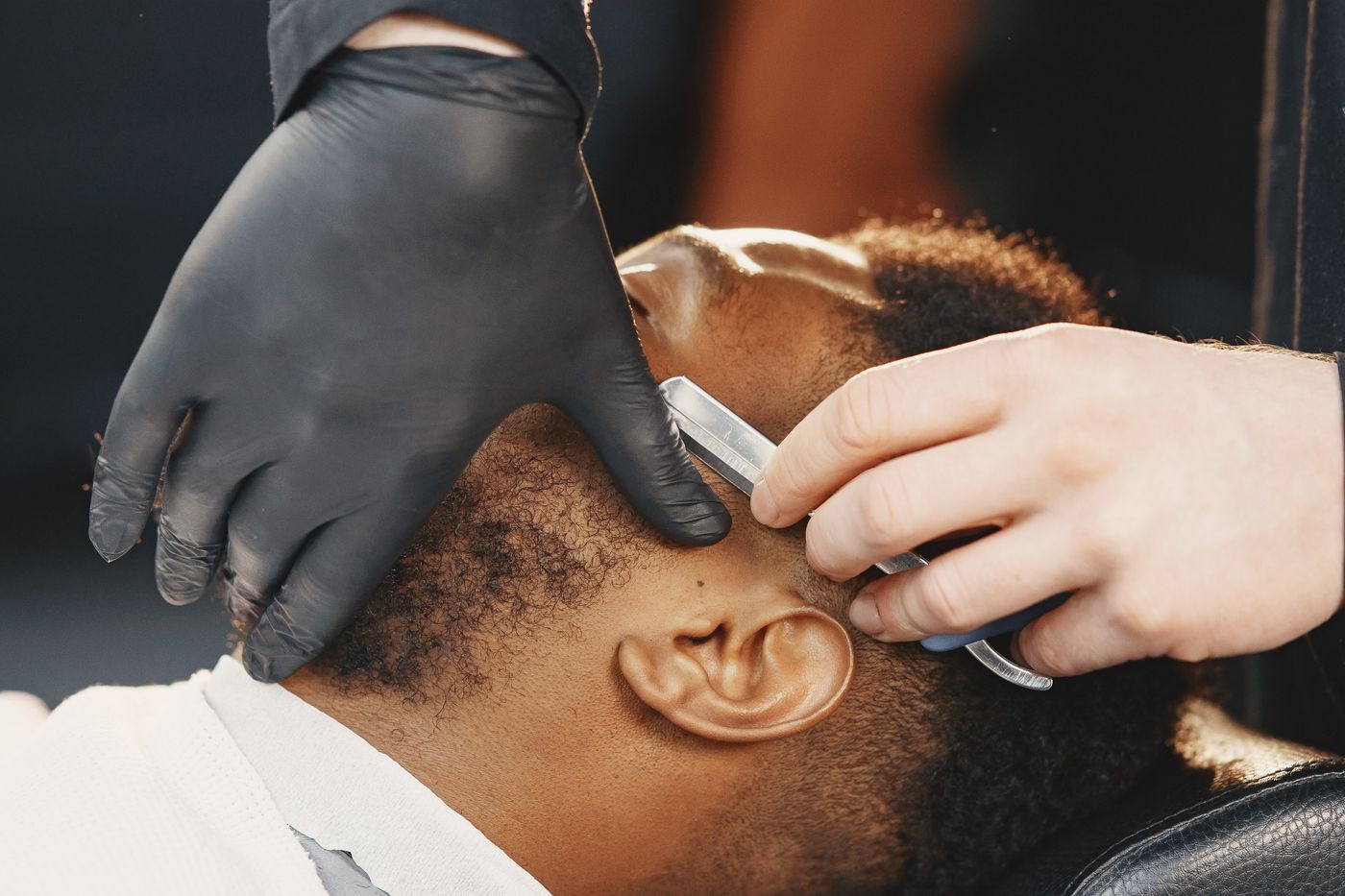
The barbershop is also, quietly, a parliament. Every culture's version doubles as a talking room, the Black barbershop of the American tradition as community institution, the Turkish berber, the Indian saloon, the Indonesian pangkas with its standing debate on football and politics conducted over your head, and the talk has rules: opinions are strong, stakes are low, everyone will be interrupted, and the man in the chair holds the floor loosely because he cannot gesture. It is conversation as practiced by our sobremesa essay, unhurried and unproductive, kept alive in male form in one of the few rooms men reliably enter. Half of what gets called the male friendship crisis is the disappearance of rooms; this one survives because a haircut cannot be downloaded.
That survival is the strategic lesson the Rituals section will keep returning to. The half hour has outlived the safety razor, the electric clipper, the home cut, the YouTube tutorial, and the subscription blade, every technology that promised to make it unnecessary, because the technologies solved the haircut and the ritual was never really about the haircut. It was about the sequence: known steps, warm towel, trusted hands, mandated pause, mirror, talc, release. Efficiency cannot compete with ceremony on ceremony's terms. Readers of the tailoring essays will recognize the pattern: the fitting and the cut are both services whose true product is the ritual around them.
Practice, in the section's standing format: go to your barber this week even if the cut can wait, and take the full service, towel, razor, talc, no phone. Notice the exact moment the drape comes off and you stand up slightly renovated, two centimeters lighter and strangely readier. That transition, marked by powder and a snap of cloth, is what ritual is for: a small ceremony that tells the nervous system a chapter has ended and a cleaner one begins. The house sells that transition in bottles. The barber has been selling it in chairs, thirty minutes at a time, since before either trade had marketing.