
The Last Repairman
The man in your city who still fixes what everyone else has agreed to throw away. Find him before he closes.
Every city has one left. The cobbler behind the market, the watch man in the arcade, the fellow who resoles, rewires, reglues and rethreads. He is usually old. He is usually alone. He works at a bench worn to the shape of his own forearms, under a lamp he has owned longer than you have been alive, and he does the one thing the entire economy has quietly decided is no longer worth doing: he makes the broken thing work again.
We have built a world that prefers replacement. It is faster, it is often cheaper, and it asks nothing of you. A sole splits, a strap snaps, a zip jams, and the frictionless answer arrives by tomorrow morning. The repairman is friction. He wants you to leave the thing with him for three days. He wants to tell you what actually went wrong. He treats your object as a patient, not a purchase.
What he is really selling is not the repair. It is the refusal to let a good object die of a small wound. A shoe is not finished because its heel is worn. A jacket is not finished because its lining has gone. These are the ordinary injuries of use, and use is the point. An object that has never needed repair has never been properly lived with.
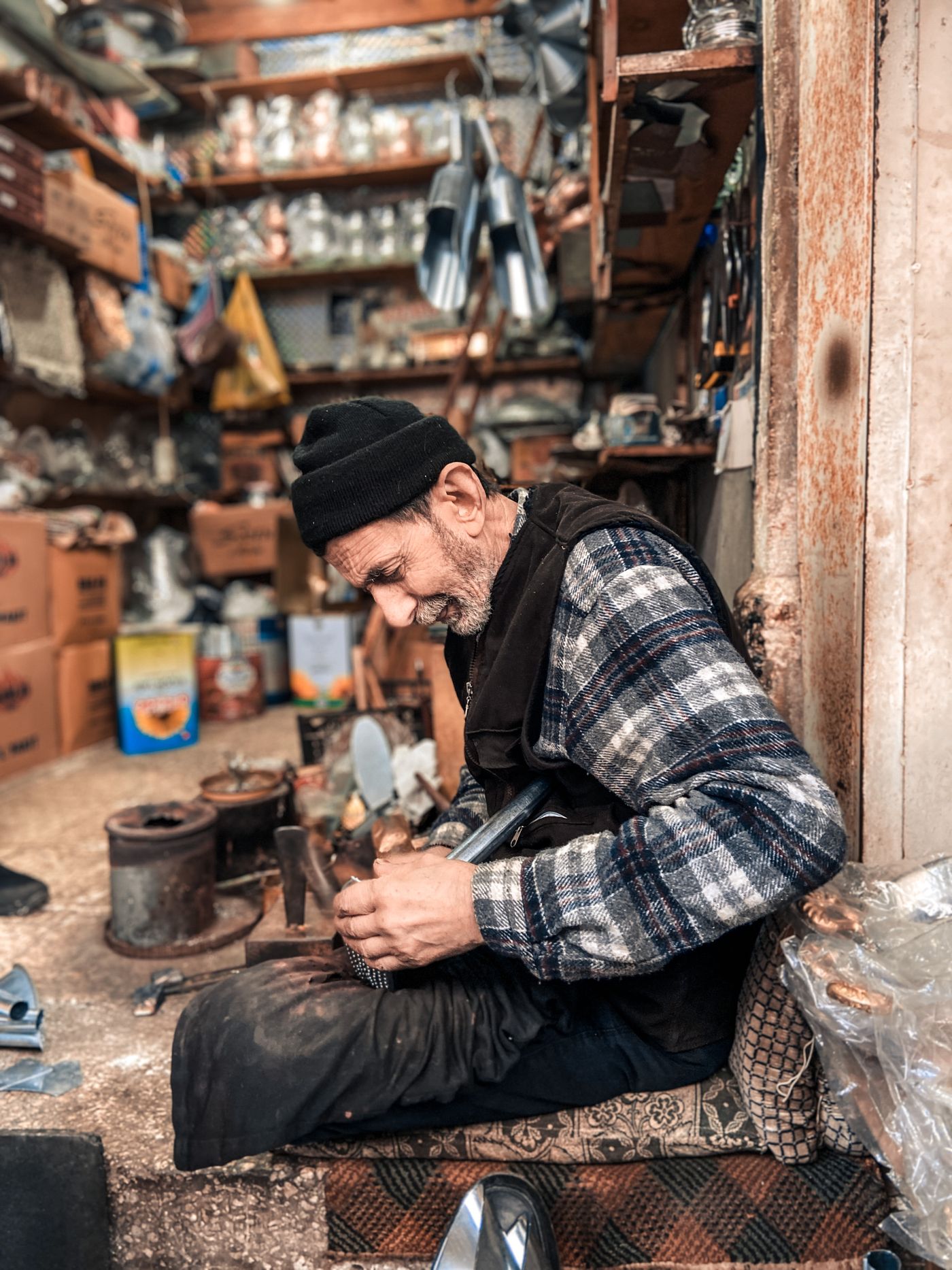
There is a specific intelligence in his hands that no manual contains. He knows how this leather behaves in the wet, how that thread ages, which glue holds and which lets go within a year. It is the same intelligence a perfumer builds at the bench, the knowledge that lives below language, in the fingertips and the nose, accumulated one small correct decision at a time.
He is also, without meaning to be, a moralist. Bring him something cheap and he will tell you, kindly, that it is not worth mending, that it was built to be discarded, that you were sold a disposable thing dressed as a lasting one. Bring him something well made and his whole manner changes. Now there is respect in the room. Good work recognises good work.
The tragedy is arithmetic. He is old, his apprentices went into other trades, and when he closes there will be no one behind the counter. The skill does not transfer by watching a video. It transfers by standing beside him for a decade, ruining things, until your hands stop ruining them. Few are willing. So each of these men is a small library about to burn.
Go and find yours. Bring the shoe you stopped wearing because the heel went, the bag whose strap frayed, the thing you loved and quietly retired. Pay him what he asks, which will be too little. You are not only fixing an object. You are casting a vote, in the last currency that matters, for a world where things are kept.