
The Side That Faces Away
A. Lange & Söhne finishes the parts of a watch that no one will ever see. That habit contains an entire philosophy.
In Glashütte, a small town in the hills of Saxony, a watch manufacture does something economically irrational as standard practice: it decorates the invisible. Inside every A. Lange & Söhne watch, the plates and bridges that face permanently away from the wearer, sealed behind a dial, are engraved, beveled, striped and polished to the same standard as the parts on display. The balance cock, a component the size of a fingernail, is engraved freehand by a specialist, no two alike, on a surface most owners will see only if they one day pay for a service and ask nicely. This is not marketing garnish. It is the whole company, stated in metal.
The history sharpens the point. Ferdinand Adolph Lange founded the workshop in 1845 and built Glashütte into Germany's answer to the Swiss valleys. In 1948 the Soviet administration expropriated the firm, and for four decades the name effectively ceased to exist. Walter Lange, the founder's great-grandson, re-registered the company in 1990, within weeks of reunification, at the age of sixty-six, and the reborn manufacture's first collection in 1994 included the Lange 1, an asymmetric dial with an outsize date that has since become one of the few genuinely new design icons in modern horology. A brand that had been dead for forty years chose, as its resurrection strategy, to over-finish the hidden side of everything. It worked.
There is a technical vocabulary for what happens on that hidden side, and it rewards knowing. Glashütte ribbing, the parallel stripes across the three-quarter plate, cut so the crests catch light in sequence. Anglage, the mirror-polished bevels along every edge, done with wood pegs and paste because machines round what should be crisp. Black polishing, a flat steel surface finished so perfectly it reads jet black from one angle and white from another. Gold chatons, tiny cups holding the jewels, secured with thermally blued screws whose color comes from judging heat by eye. And then the double assembly: Lange builds each movement completely, regulates it, takes it entirely apart, cleans it, and builds it a second time. The first assembly is for the metal. The second is for the promise.
The house's connection here is not aspirational shopping; it is professional recognition. A perfume also has a side that faces away. The drydown at hour nine, when only the wearer is left in the room. The base materials that cost most and announce least. The maceration months nobody sees. A formula can be built to survive the first spray in the shop, or built for the person still wearing it at midnight, and the two disciplines produce different houses. When we say a bottle is finished on the side that faces away, this Saxon habit is exactly what we mean, and our Hokusai piece is the same sermon with a brush instead of a graver.
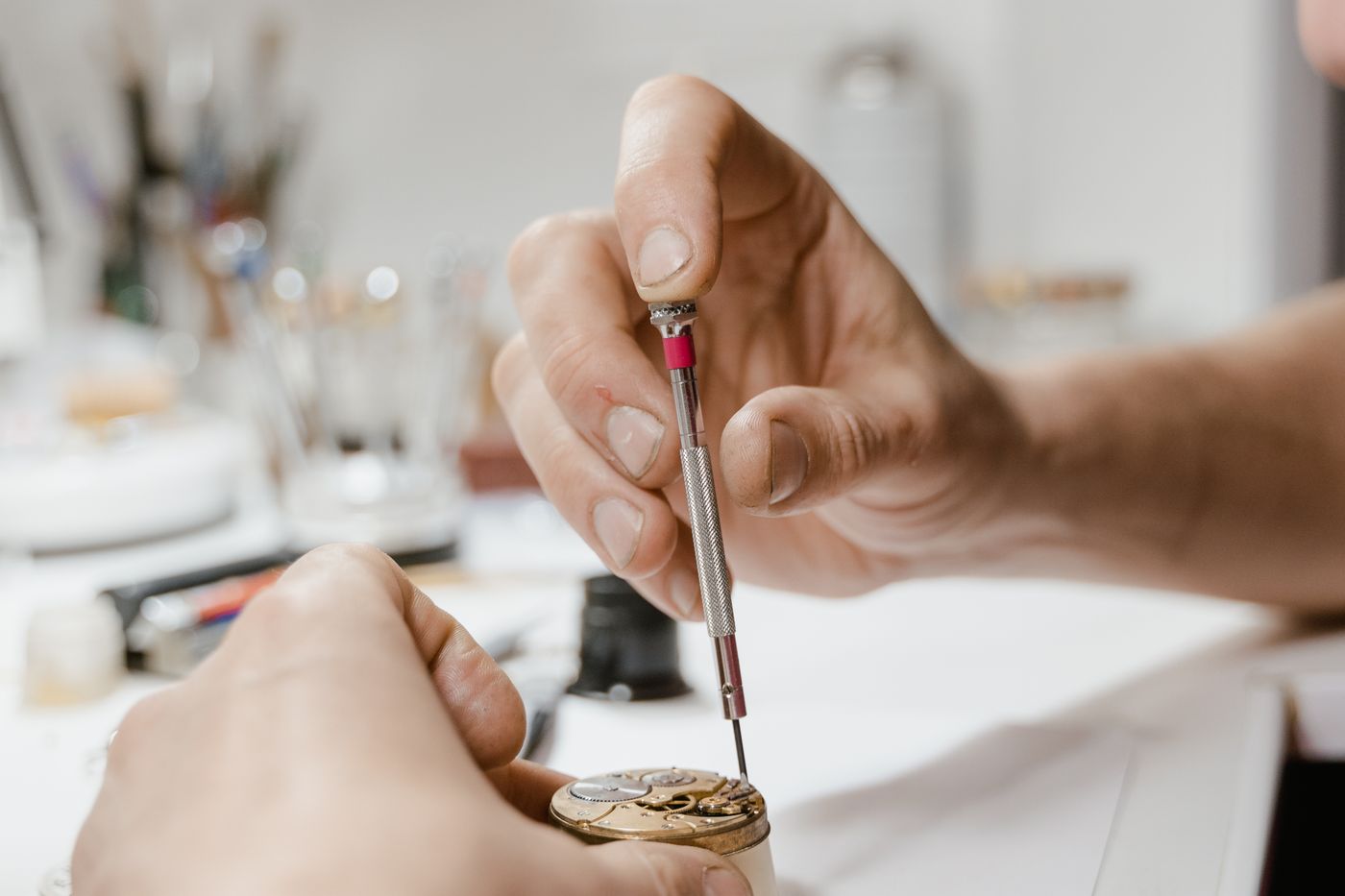
It is fair to ask who this is all for, and the honest answer is layered. Partly the eventual watchmaker who services the piece in thirty years, craft as a letter to a future colleague. Partly the owner's knowledge, which changes how an object feels even when the evidence is sealed away; ask anyone who has worn honest cloth against a synthetic copy. And partly, one suspects, for nobody at all, which is the most serious answer. Work done to standard in the absence of witnesses is the only reliable definition of integrity anyone has produced, and it is easier to state than to fund.
A note on the wanting of such things, because this journal has read its Veblen. A Lange costs what a car costs, and the house is not pretending otherwise or pretending immunity. But notice which direction the signaling runs: the finishing that matters is precisely the part that cannot be flexed, cannot be photographed on a wrist, cannot perform. As status objects go, one whose entire value proposition is invisible to the audience is about as close to honest as the category allows. The buyer is signaling to themselves.
You do not need the watch to keep the lesson. Pick the part of your own work that nobody reviews, the code comments, the seam allowance, the base accord, the citations, and finish it to display standard once. The strange thing that happens afterward, the quiet recalibration of what you consider done, is the actual product Glashütte has been shipping since 1845. The watch is just the receipt.