
Lighting the First Incense
One stick, one match, and the oldest use of fragrance there is. How the workday opens at the bench.
The word perfume confesses its origin every time it is spoken: per fumum, through smoke. Before fragrance was a liquid in a bottle it was a solid in a fire, resins and woods surrendered to embers so their smoke could carry something upward, a prayer, a farewell, a marking of the hour. Every altar this journal has ever walked past, in Kyoto at dawn, on Melaka's Harmony Street, at the corner warung where a stick burns beside the till for luck, is practicing the trade's founding gesture. So it should surprise nobody that this house opens its workday the ancestral way: one stick, one match, lit before the first strip is smelled, as the last station of the morning liturgy.
The choice of stick is a small daily curation. Some mornings sandalwood, the honest workhorse, milky and calm. Some mornings a Japanese blend, aloeswood and spices, precise as their tea. On serious mornings, gaharu, agarwood, the archipelago's own black gold, the wounded heartwood this region has exported since before the ports had names, and the deepest smell this house knows: sweet rot and honey and temple floor, the forest's memory of its own injury turned into the most valuable wood on earth. Indonesia still supplies much of the world's gaharu. Lighting it at a Jakarta workbench is not exoticism. It is local sourcing.
Japan, characteristically, built the practice into a discipline, and the house studies it from a respectful distance. Kodo, the way of incense, stands beside tea ceremony and flower arrangement among the classical accomplishments, and its verb is the instruction: one does not smell the incense, one listens to it, monko, attending to a wood's character the way one attends to a quiet speaker. The ceremony's games, distinguishing woods blind, matching them to poems, are connoisseurship as meditation, and its taxonomy of aloeswood, six countries, five tastes, is a reminder that centuries before gas chromatography, human attention alone built classification systems this trade still respects. Listening is the correct verb. The house has adopted it at the bench, where the difference between smelling a strip and listening to one is the difference between checking and understanding.
The practical function of the first stick is timekeeping, and incense has always moonlighted as a clock. Temple sticks are cut to burn fixed durations; whole systems of hours, in old China and Japan, ran on graduated incense, time made smellable, and the poor man's hourglass was a stick you could glance at with your nose. The bench inherits this directly: one stick is about forty minutes, and forty minutes is the length of the morning's first honest work session, yesterday's trials re-smelled, the vault notes written, before the phone is permitted its opinions. When the stick ends, the opening office of the day is over. No timer app involved; the clock is cedar-scented and cannot show notifications.
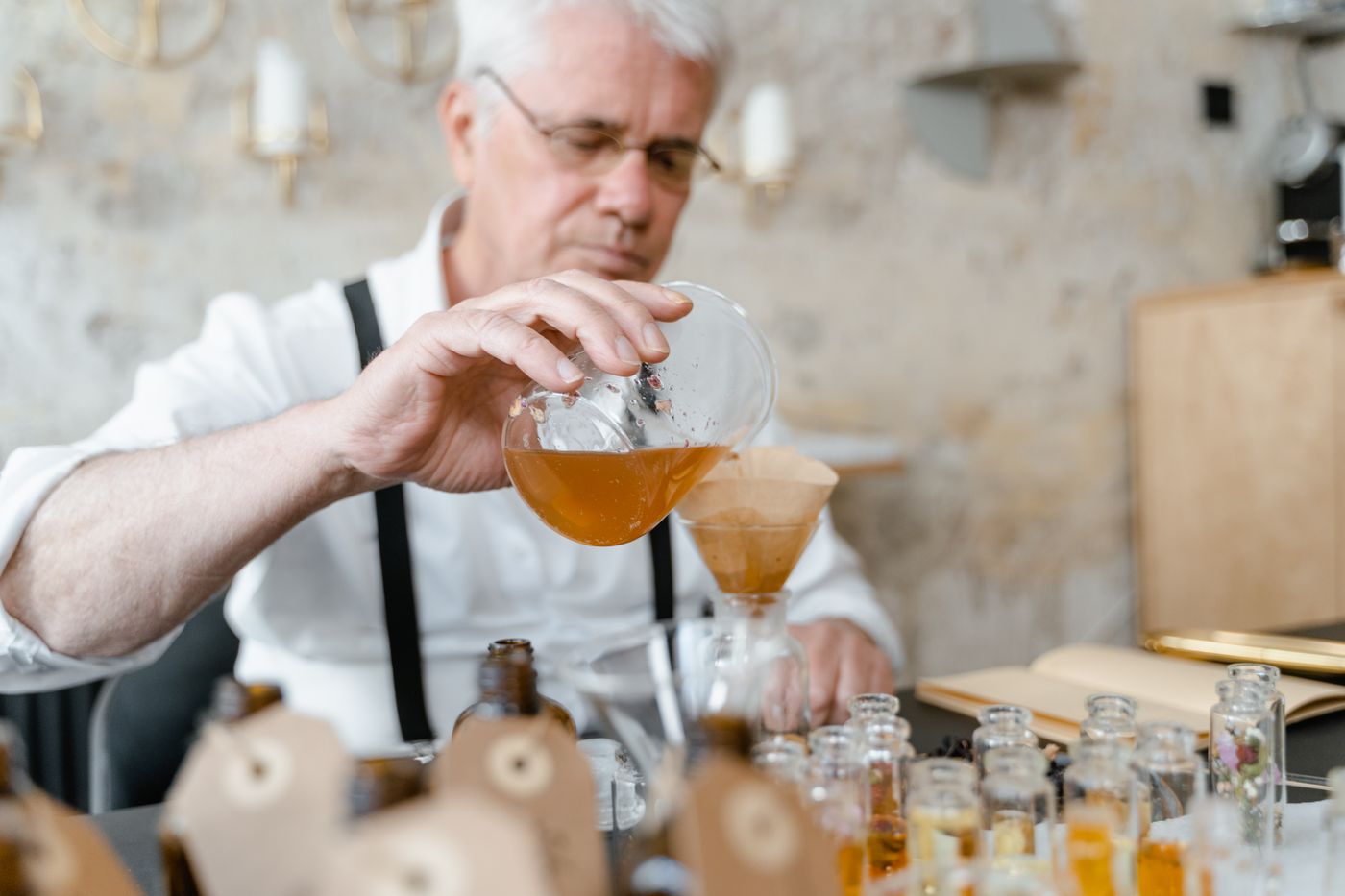
There is a technical objection the house should answer in public: why would a perfumer scent the room before judging scents? The answer is sequence, the ritual's favorite word. The stick burns during the vault-and-review station, the reading work; it is finished, windows opened, air changed, before any fine judgment is attempted, the way a conductor lets the orchestra tune before demanding silence. And the stick performs a service no neutral air can: it marks the room. Threshold smells, the trades of attention have always known, tell the nervous system where it now is, church, temple, studio, and what conduct the place expects. The first incense declares the room a workshop. The declaration outlasts the smoke.
The gesture also keeps the house honest about its own family tree. A niche perfume house can drift into believing its trade began in Grasse and lives in flacons; the morning stick corrects the genealogy daily. This region burned fragrance for a thousand years before it wore it, the kretek's clove smoke is the street-level cousin, the temple coil the sacred one, and the smoke lineage runs through the whole weather section in inverted form. Fragrance began as something given to the air on purpose, at a chosen hour, with a meaning attached. The bottle is a portable ember. The house lights the original kind each morning partly as craft, partly as citation.
Practice, and the section closes its first five on it: buy one good stick, real sandalwood or the best aloeswood the budget allows, and give it a fixed slot in your day, first coffee, first page, last light. Do nothing else ceremonial; the stick carries the ceremony. Within a fortnight the smell alone will start the state the slot was built for, which is the entire mechanism this house sells, and the oldest one it knows: smoke, telling the hour, through fragrance, on purpose. Per fumum. Still.